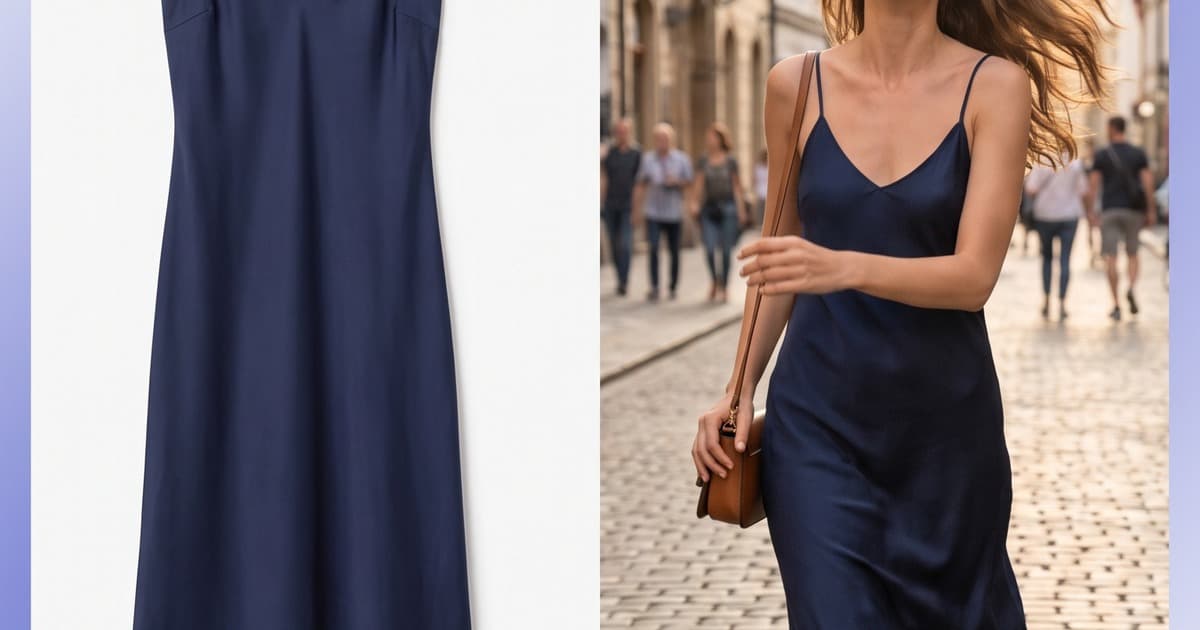
The white-background product shot used to be enough. Upload a flat-lay, maybe add a ghost mannequin, call it a day.
That era is over.
In 2026, shoppers scrolling through Instagram, TikTok, and Google Shopping are being served lookbook-quality content at every touch point. The brands winning their attention — and their purchases — aren't doing anything radically different. They're just meeting the new visual baseline that customers now expect before they'll even click through.
Here's what changed, what "lookbook-quality" actually means today, and how AI has flipped the economics so that every brand — not just enterprise players — can compete visually.
How Consumer Expectations Got Here
Visual expectations in fashion ecommerce didn't spike overnight. They crept up over years, accelerated by a few key shifts:
Social media set the new standard. When shoppers spend hours daily on feeds filled with editorial-quality content — perfectly lit outfits, aspirational settings, model movement — a stark white background on a product page starts to look like a stock photo. The contrast is jarring. It signals "budget brand" even when the product itself isn't.
The D2C boom raised the floor. The wave of direct-to-consumer fashion brands that emerged between 2017 and 2023 invested heavily in photography and brand identity. Brands like Reformation, Entireworld, and Skims built cult followings on the back of distinct, high-quality visual identities. Their imagery became the benchmark shoppers compare against, consciously or not.
Search results turned visual. Google Shopping, Pinterest, and even standard search results now surface editorial images. Brands with richer visual assets appear more prominently and convert better from discovery.
Video became expected on PDPs. A 2025 study from Bazaarvoice found that shoppers are 73% more likely to purchase after watching a product video. On fashion-specific platforms, that number is even higher — because movement reveals fit, drape, and fabric behavior in ways photos simply can't.
The result: a brand with basic product photography is now competing against brands with editorial lookbooks, on-model video, lifestyle context shots, and consistent visual identities — and losing.
What "Lookbook-Quality" Means in 2026
This isn't about having a big photography budget. It's about hitting a specific set of visual standards that have become table stakes for competitive fashion ecommerce.
1. On-Model Presentation
Products need to be shown on a human body. Full stop.
Flat-lays and ghost mannequins are useful as supplementary angles, but they can't carry a product page. Shoppers need to see how a garment fits, how it drapes, how it moves. Brands that only show flat-lays see significantly higher return rates — buyers can't accurately gauge fit, so they order, it doesn't look right, and it goes back.
On-model photography doesn't mean just any on-model shot. The model needs to match your brand's aesthetic and audience. The styling needs to be intentional. The poses need to show the garment in its best context.
2. Editorial Lighting and Composition
There's a meaningful difference between "product documented" and "product presented."
Editorial lighting creates mood, dimension, and desire. It makes fabric textures visible — the sheen of silk, the weight of denim, the softness of cashmere. Flat, even lighting from a photo tent eliminates exactly the visual information that makes shoppers want to touch (and buy) a product.
Composition matters equally. Editorial shots use negative space, interesting angles, and deliberate framing. They don't center the subject mechanically — they create a visual experience.
3. Lifestyle Context
Shoppers don't just buy garments. They buy an identity, a feeling, a version of themselves wearing that outfit somewhere.
Lifestyle photography answers the question "where would I wear this?" A linen blazer shot against a terracotta wall in soft afternoon light communicates "weekend in the south of France" in a way that a studio shot never can. A technical jacket shown mid-hike on a mountain path answers "is this actually outdoorsy?" without a word of copy.
Lifestyle context increases average order value, reduces returns (customers have more realistic expectations), and builds brand equity over time.
4. Visual Consistency Across the Catalog
This is where many brands fall apart even when they're investing in good photography.
A catalog shot across multiple days, with different photographers, varying lighting setups, and different model call times produces an incoherent visual identity. Even if individual shots are excellent, the lack of consistency makes the brand feel scattered.
Visual consistency — same lighting style, same model, same background treatment, same color grading across every SKU — creates the impression of a brand that knows who it is. That trust translates directly to conversions.
5. Video on Every Product Page
A product page without video is increasingly incomplete.
Video captures what photos can't: fabric movement, fit in motion, garment weight, natural drape. A model walking toward camera in a flowing dress communicates more about the dress than ten still photos. A hoodie shown being pulled on shows the fabric texture in a way no image can replicate.
The challenge used to be economics. Shooting video for every SKU in a catalog meant a video crew, a whole separate production day, and per-SKU costs that only made sense for hero products. Most brands ended up with video for 10% of their catalog and static images for the rest.
AI video generation has changed this calculation completely. More on that below.
The Gap Between Brands Who Have This and Brands Who Don't
The conversion gap between brands with lookbook-quality visuals and those without isn't subtle.
| Visual Standard | Approximate Conversion Impact |
|---|---|
| Flat-lay only → On-model photos | +25–40% conversion rate |
| Studio lighting → Editorial lighting | +15–20% engagement, lower bounce |
| No lifestyle → Lifestyle context shots | +12–18% AOV |
| Static only → With product video | +30–50% purchase intent |
| Inconsistent → Consistent visual identity | -20–30% return rate |
These aren't small margins. And they compound: a brand that nails all five elements is operating in a completely different conversion league than one that doesn't.
The problem historically has been that achieving all five required significant resources: a dedicated creative team, regular studio days, video production, and the budget to support it all. That's been realistic for enterprise brands and the well-funded D2C players. For mid-market and independent brands, it meant making tradeoffs — and those tradeoffs showed in the metrics.
Why AI Changed the Economics
The shift that's happened over the past 18 months is that AI has decoupled visual quality from production budget.
Each of the five lookbook-quality standards above can now be achieved with AI tools — at a fraction of the cost and in a fraction of the time.
AI On-Model Photography
Instead of booking models, scouts, fittings, and a studio, brands now upload garment images and select from a library of AI models. The output is professional on-model photography that shows the garment in context, with the right fit and styling.
Tellos AI Photo Studio can generate on-model shots from flat-lays, handling the entire production process from a single upload. A 50-SKU collection that previously required a two-day studio shoot can be completed in hours.
We covered the model casting side of this in detail in our post on AI model casting for fashion lookbooks — worth reading if you're thinking about how to maintain visual consistency across a full collection.
AI Editorial and Lifestyle Backgrounds
Generating editorial lighting and lifestyle contexts from product photos is now standard. Brands can specify the setting, mood, and aesthetic direction — urban, natural, minimal, editorial — and receive consistent results across their full catalog.
This is particularly powerful for lifestyle content. A brand can generate the same jacket in a city context, a mountain setting, and a studio closeup — multiple content pieces from one product image — without ever leaving the office.
AI Video for Every SKU
This is perhaps the most significant unlock. AI video generation takes product photos and produces realistic motion video: models walking, fabric moving, garments behaving dynamically.
What was previously economically impossible — video for every product in a catalog — is now a realistic workflow. Fashion brands using AI video are reporting conversion lifts of 30-50% on pages with AI-generated model video versus static images.
The same applies to social content. TikTok product videos from AI and fashion lookbook videos are now standard workflows for brands posting daily on video-first platforms.
Visual Consistency at Scale
AI's biggest structural advantage over traditional photography is consistency.
In a traditional shoot, consistency across 200 SKUs is genuinely difficult to maintain. Lighting shifts as the day progresses. Model energy changes after hour six. Background papers crease. There are a hundred small variables that introduce visual noise.
AI has no fatigue, no drift, no variables. The same settings applied to SKU #1 apply identically to SKU #200. Consistent fashion photography at scale is no longer a function of production discipline — it's a structural property of the AI workflow.
Building Your 2026 Visual Strategy
Meeting the new standard doesn't require doing everything at once. Here's a framework for brands at different stages:
Stage 1: Get On-Model Across the Full Catalog
If you're still using flat-lays or ghost mannequins as your primary product image, this is the highest-leverage move. The conversion lift from on-model photography is the single largest jump you can make.
Priority action: Batch your full catalog through AI on-model generation. Establish a consistent model and styling direction. Apply it to every SKU.
Stage 2: Add Lifestyle Context for Hero Products
You don't need lifestyle shots for every product immediately. Start with your bestsellers and new arrivals — the products driving most of your revenue and discovery.
Priority action: Generate 2-3 lifestyle contexts per hero product. Test which contexts drive the best engagement and double down.
Stage 3: Add Video to Your Top PDPs
Video has an outsized impact on purchase intent. Start with your top-converting products and add AI model video.
Priority action: Add video to your top 20 PDPs. Measure conversion lift. Expand from there.
Stage 4: Build a Content Calendar Around Your Visual Assets
One AI catalog session generates far more than product page images. The same assets can fuel:
- Instagram feed: Editorial and lifestyle shots, daily posting
- TikTok: Short video clips per product
- Email campaigns: On-model imagery for newsletters
- Paid ads: Multiple creative variations from the same base images
- Wholesale catalogs: Professional PDFs for B2B buyers
We covered this in detail in our post on fashion brand content calendars powered by AI — the concept of a single AI production session feeding your entire content strategy for a month.
Stage 5: Make Visual Quality a Seasonal Constant
The final stage is treating high-quality visual production as an ongoing operational practice rather than a periodic project.
This means:
- Every new collection launches with full on-model coverage from day one
- New SKUs are added with the same visual treatment as existing catalog
- Seasonal lifestyle contexts are refreshed to stay current
- Video content is produced as a default, not an exception
AI makes this sustainable. The seasonal lookbook production timeline collapses from weeks to days. Brands that previously struggled to have visuals ready for collection launches can now generate complete coverage before samples even arrive.
The Competitive Pressure Is Only Going Up
Here's the uncomfortable reality: the brands not making this shift now will find themselves further behind each month.
As AI tools become standard, what's currently a differentiator will become baseline. The brands building AI-powered visual workflows today are establishing production velocity and visual libraries that will be difficult for later adopters to close the gap on.
The good news is that the window for gaining advantage is still open. The majority of independent and mid-market fashion brands are still operating with traditional photography workflows — which means AI adopters are getting a genuine competitive edge, not just meeting parity.
The question isn't whether lookbook-quality visuals are achievable for your brand. AI has made that a settled question. The question is whether you build that capability this quarter or let competitors build it first.
What Tellos Does
Tellos is the platform that makes this entire workflow operational for fashion brands.
Upload your products. Generate on-model photography, editorial and lifestyle contexts, and product video for your full catalog — without a studio, a model booking, or a production team.
The complete visual strategy — on-model photos, lifestyle shots, consistent catalog imagery, and product video — is available in a single platform.
Start building your 2026 visual strategy with Tellos →
Related reading: