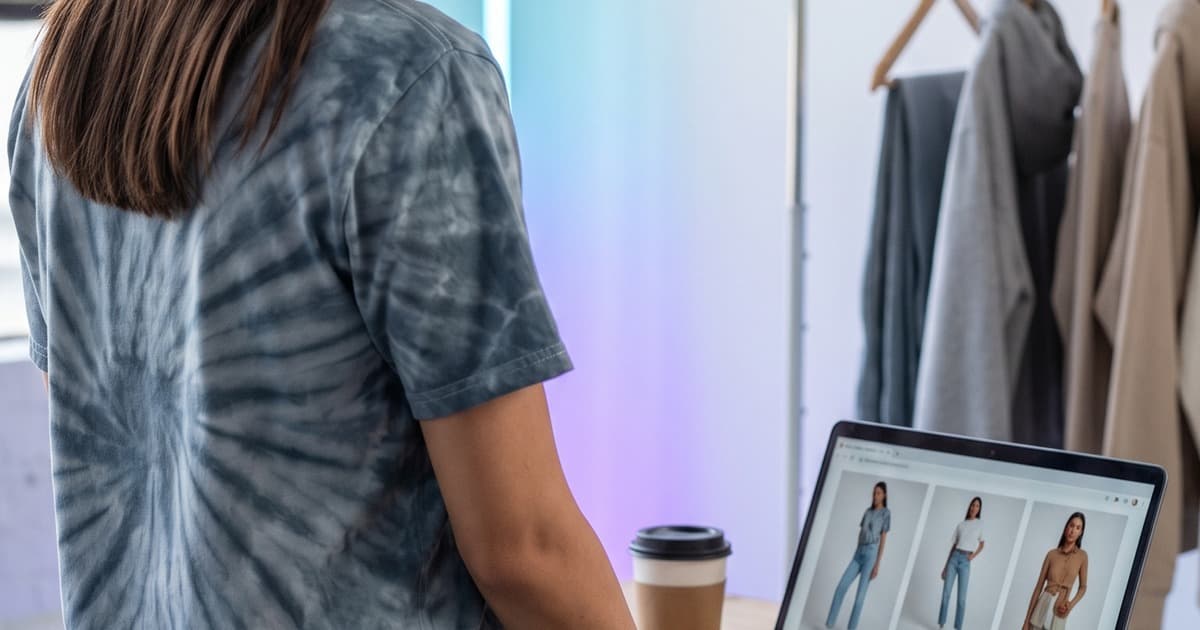
Photography costs kill fashion startups before they launch.
You've designed the collection, sourced the fabrics, placed the production order. Then you get a quote for a launch photoshoot: $8,000–$15,000. That's before you've sold a single unit.
Most first-time fashion founders face exactly this wall. And most of them make one of two bad decisions: either they blow a significant chunk of their budget on photography before validating anything, or they launch with amateur flat-lays and wonder why conversions are flat.
In 2026, there's a third option — one that wasn't viable even two years ago.
AI-generated fashion content has reached the quality level where you can build a fully credible brand visual identity before your inventory ships, at a cost that doesn't threaten your runway.
This post walks through exactly how to do it.
The Photography Problem for New Fashion Brands
The economics of traditional fashion photography are brutal for early-stage brands.
A proper launch shoot — the kind that makes your brand look like it deserves to exist — typically involves:
- Photographer: $800–$2,500/day
- Location or studio: $400–$1,200/day
- Models: $400–$800 each, per day (you need 2–3)
- Hair and makeup artist: $300–$600/day
- Styling: $300–$500/day
- Post-production/editing: $600–$2,000 (depending on image count)
- Art direction: Often bundled with photographer, but sometimes separate
For a modest 20-piece collection, you're looking at $5,000–$12,000 minimum — and that's before printing, packaging, or any marketing spend.
The math only works if you already have paying customers. But you can't get paying customers without professional visuals.
That's the catch-22 every fashion founder hits.
What AI Changes
AI-generated fashion content breaks this loop completely.
Instead of booking a shoot around physical samples, you:
- Photograph your garments as flat-lays — on a clean surface, in natural window light, with a neutral background. No crew needed.
- Upload to an AI platform — the AI generates on-model images of your garment on professional virtual models, in styled environments.
- Export campaign-ready content — hero product images, lifestyle shots, editorial-style lookbook pages, and even short video clips for social and ads.
The output quality is no longer "pretty good for AI." It's indistinguishable from a mid-to-high production shoot in most cases — consistent lighting, natural fabric drape, styled backgrounds that match your brand aesthetic.
And the cost? A fraction of a traditional shoot. Enough that testing before scaling becomes the obvious strategy.
The Lean Fashion Launch Stack
Here's the complete content toolkit you need to launch — and how AI covers each piece:
1. Product Detail Page (PDP) Images
Every product needs:
- A clean on-model hero image (or white background, depending on your market)
- 3–5 additional angles (side, back, detail, lifestyle)
With AI, you generate all of these from a single flat-lay. Same model, same lighting, consistent framing across your entire catalog. This is actually harder to achieve with a traditional shoot — model availability, lighting shifts, and reshoots across multiple days inevitably introduce inconsistency.
For a 20-piece collection, generating a full PDP image set with AI takes hours, not days.
2. Lookbook
Your launch lookbook is your brand's first impression for wholesale buyers, press, and serious customers. It sets the tone for everything.
AI lookbook generation produces editorial-quality, cohesive imagery — the kind of lifestyle and on-model shots that communicate a brand world, not just products.
You can define:
- Model aesthetic: skin tone, hair, build
- Setting: urban street, minimal studio, outdoor natural, architectural interiors
- Lighting mood: bright and airy vs moodier editorial
The result is a 15–30 page lookbook that matches the visual language of brands with much larger production budgets.
If you want to go deeper on this, read our guide on AI lookbook photography for fashion brands.
3. Instagram Content (First 30 Days)
Your Instagram grid needs to look intentional from day one. Nothing signals "amateur" faster than an inconsistent grid with varying lighting and random aspect ratios.
AI-generated content gives you visual grid consistency by default — because every image comes from the same generation session with the same settings. You can batch-produce 4–6 weeks of Instagram content in a single afternoon before you launch.
Formats to generate:
- Square hero images for feed posts
- Vertical close-ups for Stories/Reels covers
- Lifestyle scenes for "world-building" posts
We covered this in detail in the fashion photography for Instagram guide.
4. Ad Creative
Your first paid ads will be tests. The goal is to find out what imagery and messaging converts — not to run one perfect ad at scale.
AI makes creative testing cheap. Instead of one set of hero images from an expensive shoot, you generate 5–10 variations per product: different model types, different backgrounds, different styling angles.
Run small tests across Meta with these variations before you've decided on your brand's creative direction. The algorithm tells you what works. Then you scale what's proven.
This is the exact approach covered in our Meta ads AI creative guide — generating 20 ad variants for the cost of one.
5. Email Welcome Series
Your launch email sequence — the welcome flow, the "here's the collection" email, the founder story email — needs product imagery embedded throughout.
AI-generated images drop straight into Klaviyo templates. Same visual quality as your site, same brand consistency. And if you want to add short video clips to email (which lifts CTR significantly), AI video gives you animated product moments without a production crew.
Real Numbers: AI vs Traditional Launch Shoot
Let's put actual figures on this.
Traditional launch shoot for a 20-piece collection:
| Line item | Cost |
|---|---|
| Photographer (1 day) | $1,500 |
| Studio rental | $600 |
| 2 models (1 day each) | $1,200 |
| Hair + makeup | $500 |
| Styling | $400 |
| Post-production (80 images) | $1,200 |
| Art direction (freelance) | $600 |
| Total | ~$6,000 |
This gets you roughly 80–120 final images — enough for PDPs but not enough for a full lookbook, ad creative testing, and 30 days of social content simultaneously.
AI content stack for the same collection:
- Flat-lay photography setup (your kitchen table, window light, $0): $0
- AI platform subscription or per-generation credits: $200–$500
- Total images generated (hero, alternate angles, lifestyle, lookbook): 200–400+
The gap is dramatic. And critically — AI gives you more volume, not less. More images means more creative tests, more social posts, more PDP completeness.
Working with Flat-Lays as Your AI Input
The quality of your AI output depends on the quality of your flat-lay input. You don't need a studio — but you do need to be deliberate.
What makes a good flat-lay for AI generation:
- Clean background: White, cream, or grey — not a patterned duvet
- Natural window light: Diffused daylight, no direct sun (which creates harsh shadows)
- Consistent framing: Same distance, same angle for every garment (consistency speeds up generation and keeps results cohesive)
- No accessories in shot: The AI focuses better on the garment when there's no visual noise
- Flat, not folded: Lay the garment completely flat so seams and construction are visible
A mirrorless camera produces better input than a phone, but a modern phone in good light is workable. The AI is generating new images, not enhancing your flat-lay — so the flat-lay is a reference, not a final asset.
We have a full guide on how to photograph clothes at home for founders in this stage. The basic setup for clean flat-lays costs almost nothing.
Pre-Launch: Generate Content Before Inventory Arrives
One of the most underused advantages of AI visual content for new fashion brands is pre-launch timeline flexibility.
Your production samples arrive 4–6 weeks before inventory. You photograph flat-lays of those samples. You generate your full content library. You build your site, schedule your emails, prep your ads, and load your social queue.
By the time inventory ships, your launch is fully built and ready. You press go on day one of delivery.
Traditional photoshoots have a 4–6 week turnaround from shoot to final edited images. For a new brand working against a launch deadline, that timeline often breaks. AI collapses it to days.
Size and Diversity Without Extra Shoots
One thing that's easy to overlook: a traditional launch shoot gives you one model. Maybe two if you're lucky.
AI lets you generate the same collection on multiple model types — different skin tones, different body types, different ages — from the same flat-lay, at no extra cost.
For a new brand trying to communicate inclusivity and reach a diverse customer base, this is significant. You're not paying for multiple shoot days or additional casting. It's a configuration choice during generation.
Shoppers are more likely to buy when they see the garment on someone who looks like them. Being able to show that from day one — without the casting budget — is a real competitive edge for early-stage brands.
When AI Is the Right Tool (and When It Isn't)
AI content is the right choice for:
- All PDP photography — consistent, scalable, cost-effective
- Lookbooks — editorial quality without the production cost
- Social content batches — volume and consistency you couldn't afford to shoot
- Ad creative testing — multiple variants without multiple shoots
- Catalog production — as your line grows
Where traditional photography still wins:
- Hero campaign content (brand films, runway-style video campaigns for major seasonal moments)
- Founder or behind-the-scenes content (authenticity that requires real humans)
- Press materials that specifically require credited photographer work
For a launch-stage brand, the honest answer is: you can do your entire first season with AI and invest your saved budget in inventory, marketing, or a single high-quality campaign shoot once you've validated what works.
The Launch Workflow, Step by Step
Here's how to structure your launch content production with AI:
Week 1 (when samples arrive):
- Photograph flat-lays of all samples
- Upload to Tellos AI Photo Studio
- Generate hero PDP images (on-model, clean background)
- Generate lookbook-style lifestyle images (2–3 per piece)
Week 2:
- Review outputs, select hero images per SKU
- Generate color variants for all multi-colorway pieces
- Build lookbook layout from generated images
- Batch-produce 30 Instagram posts from lookbook images
Week 3:
- Build Shopify PDP pages with AI images
- Load email welcome sequence with product visuals
- Create Meta ad creative variants (5–10 per hero product)
- Prep TikTok content queue
Week 4 (pre-launch):
- Soft-launch social presence
- Run small ad tests (€5–€10/day per creative) to identify winners
- Finalize wholesale catalog and buyer deck
Launch day:
- Inventory arrives → site goes live → ads scale on proven creative
- You're not scrambling for content. Everything is ready.
The Mindset Shift
The biggest change isn't tactical — it's how you think about launch risk.
Traditional launch photography is a big upfront commitment. You spend $8,000 before you know if anyone wants what you're selling. That's a bet, not a test.
AI content lets you launch with a test mentality. You generate quickly, validate what converts, and scale production investment into what's working. If a product flops, you haven't burned $400 of photography budget on it. You move on.
This is how the best-performing DTC brands operate at scale — constant creative testing, rapid iteration, data-informed scaling. AI finally makes that model accessible to a brand launching with 20 SKUs and a lean team.
Ready to Launch?
If you're building a fashion brand and staring at a photoshoot quote that doesn't fit your budget, Tellos AI Photo Studio is the platform built for exactly this.
Upload your flat-lays. Choose your model aesthetic and brand environment. Generate a full campaign-ready content library — lookbook images, PDP photos, social content, ad creative variants — in hours.
No crew. No location booking. No waiting three weeks for edited files.
Your launch looks the way it should from day one. And you keep the budget for what matters: getting customers through the door.