A buyer opens your email. They have sixteen other brand pitches to get through today. Your static PDF catalog is the eighth one they've looked at.
They close it after fifteen seconds.
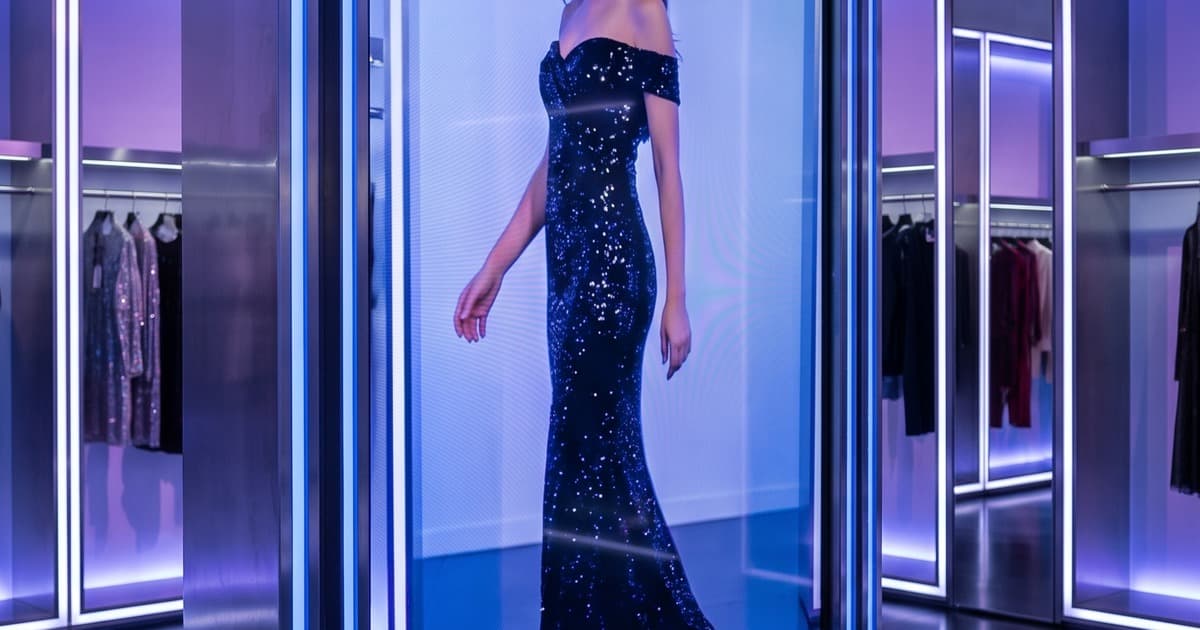
Now imagine: they open a link and a model walks into frame, turning slowly so the drape of your new coat is immediately visible. The fabric catches the light. The silhouette reads clearly. The entire collection moves.
That's not a future vision. That's what AI video lookbooks deliver — and the brands sending them are standing out in buyer inboxes in a way no PDF ever has.
Why Wholesale Buyers Make Decisions Differently
Retail and wholesale purchasing are fundamentally different cognitive processes. A consumer browsing your Shopify store has time to click through images, zoom in on details, and read descriptions. A wholesale buyer — whether at a trade show, on a Zoom call, or processing your email pitch — is making decisions across dozens of collections simultaneously.
Their questions are different too:
- Does this garment have presence? Will it stop foot traffic in my store?
- How does it move? Knitwear that looks flat in photos might have beautiful drape in motion.
- Does this brand look professional enough to trust with my store's floor space?
- Is this a story I can tell my customers?
Static photography answers some of these questions. Video answers all of them — much faster.
A buyer who watches a 45-second video lookbook has processed more information about your collection than they would have reading a 12-page PDF. And they've experienced your brand's aesthetic in a way that creates actual memory and association.
The Traditional Problem: Video Lookbooks Cost a Fortune
Fashion brands know this. Most of them have wanted to produce video lookbooks for years. The math has just never worked.
A proper video lookbook shoot requires:
- A video director or cinematographer
- A lighting team (different requirements than stills)
- Hair, makeup, and wardrobe stylists
- Models with video performance experience (very different from stills)
- Location or studio rental with video capability
- Sound recording or music licensing
- A full post-production workflow: editing, colour grading, sound design
- Often a separate shoot from your stills campaign
The budget for a professional collection video lookbook typically runs £8,000–£25,000 depending on production values, locations, and collection size. That's before delivery formatting — you'll need different cuts for email, trade show screens, Instagram, and your digital showroom.
For most independent and mid-size fashion brands, that budget simply isn't available for every season. So the video lookbook stays on the wish list, and buyers keep getting PDFs.
What AI Video Lookbooks Change
AI-powered video generation inverts this economics completely. Instead of starting from scratch with a film crew, you start from what you already have: your product photos or flat-lays.
Here's the actual workflow:
- Photograph your garments — even flat-lays work as the source input
- Upload to an AI video platform like Tellos AI Video Studio
- Select AI model and setting — choose from a diverse library of AI models
- Generate — the AI animates the model naturally wearing the garment, with realistic movement
- Assemble into a collection lookbook sequence
- Export in formats appropriate for each distribution channel
What used to take a week of production and a week of post-production now takes a few hours. The cost per collection drops from five figures to something accessible even for a 20-piece capsule.
And critically — the quality communicates what matters to buyers: fit, drape, movement, and the way your garments actually behave on a body.
What Buyers Actually Respond To
Not all video content is equal. Wholesale buyers aren't impressed by TikTok-style cuts or heavy motion graphics. What makes a B2B video lookbook land well with buyers is different from consumer-facing content.
Movement That Communicates Fabric
A coat should billow slightly as the model turns. A silk blouse should have a liquid quality when the model shifts weight. A structured jacket should hold its shape. AI video generation captures these fabric-specific movement signatures, giving buyers the material intelligence they need to assess garment quality without holding a physical sample.
This is especially powerful when you're pitching:
- Knitwear — buyers can assess stretch and recovery
- Wovens and tailoring — they can see whether the cut holds structure
- Lightweight fabrics — drape and fluidity communicate immediately in video
Consistent Presentation Across the Collection
Buyers are looking at your collection as a whole — does it hang together as a coherent brand story? Video lookbooks built on AI have a consistency advantage that's hard to achieve with traditional shoots.
Same model. Same colour grading. Same pacing. The entire collection feels like it belongs together, which is exactly the impression you want buyers to carry out of your presentation.
If you're presenting 30 pieces, having visual continuity across all 30 sends a professional signal that's difficult to achieve even with expensive traditional production.
A Narrative, Not Just Products
The best wholesale video lookbooks aren't product reels — they're short films. Even at 60–90 seconds for a full collection preview, AI-generated video allows you to create something with a mood, a setting, a point of view.
Coastal morning light. Urban rooftop. A clean white studio with strong shadows. These contexts are as much a part of the pitch as the garments themselves — they tell buyers which customer you're designing for and how they should position your pieces in their store.
Where to Use AI Video Lookbooks in Your Wholesale Strategy
Pre-Meeting Email Pitches
The most immediate application. Instead of attaching a PDF catalog, you send a link to a 60-second collection preview. Subject lines with video consistently outperform static attachments in open and reply rates.
A short video does what no PDF can: it creates genuine anticipation before the meeting. Buyers arrive having already formed impressions of your collection, which makes the actual conversation more productive.
Digital Showrooms (Joor, NuOrder, Faire)
Digital wholesale platforms have become the primary interface for buyer-brand relationships, especially for international accounts. Most brands on these platforms are presenting with static images. Adding a video lookbook to your Joor or NuOrder profile is an immediate differentiator.
Buyers scrolling through marketplace listings are more likely to click into a brand that shows movement. And once they're in your showroom, a collection video keeps them engaged longer — which directly correlates with order size.
Trade Show and Market Week Presentations
For physical presentations, video gives you a dynamic backdrop that runs continuously on a screen behind your samples. Buyers approaching the stand immediately understand the collection's aesthetic and positioning before they've touched a single piece.
This also works as a preparation tool: video lookbooks circulated to buyers ahead of the show mean they arrive with pre-formed opinions and questions. The stand conversation becomes an edit session, not a first introduction.
Post-Show Follow-Up
The critical window. After a trade show, buyers are fielding follow-ups from dozens of brands. A follow-up email with a video link ("Here's the full collection preview for your reference, with all colourways") is more likely to be opened and acted on than a plain attachment.
Combined with a line sheet, the video lookbook gives buyers everything they need to make a final order decision without requiring another call.
Wholesale Email Campaigns to Existing Accounts
For existing retail accounts, seasonal video lookbooks serve as a re-engagement mechanism. A well-produced collection preview sent in advance of each buying season keeps your brand visible and positions new arrivals effectively.
Buyers who aren't actively reaching out to you will be more likely to check your new season if it arrives as a short, compelling video preview rather than another catalog email.
Building a Wholesale Video Lookbook: A Practical Guide
If you're new to AI video production, here's a concrete approach to building your first wholesale lookbook.
Step 1: Plan the Collection Sequence
Decide how you want to sequence the garments. Usually this follows the logic of an actual lookbook: start with a strong hero piece, move through the collection with visual logic (by product category, colour story, or styling group), and end with another strong piece.
For 30 pieces, a video lookbook doesn't need to show everything. A curated selection of 10–15 hero styles, ideally in your 2–3 key colourways each, gives buyers a complete impression without overwhelming them.
Step 2: Prepare Your Source Files
AI video generation gives you the best results when your source images are consistent:
- Same background — white or plain backgrounds are easiest for the AI to work with
- Consistent framing — full body or three-quarter length
- Good base image quality — higher resolution input produces better video output
If you have styled flat-lays from a home setup, these often work well as inputs. The AI handles the model and setting selection; your job is to provide a clean product view.
For more on getting the most from flat-lay inputs, see From Flat-Lay to Full Lookbook: How AI Transforms Product Photos into Editorial Content.
Step 3: Choose Model and Setting for Consistency
Pick one AI model for the entire collection. This is what creates the through-line visual consistency that reads as professional to buyers.
Select a setting appropriate to your brand positioning:
- Studio/neutral — works for contemporary, minimalist, tailoring brands
- Lifestyle setting — appropriate for casualwear, sportswear, or lifestyle-positioned collections
- Editorial — high-fashion or premium brands often benefit from more atmospheric settings
The key is that all pieces in the lookbook share the same visual world.
Step 4: Generate and Review
Generate video clips for each piece. Review specifically for:
- Fabric movement accuracy (does the fabric behave like the actual material?)
- Model pose and movement appropriateness for the garment type
- Colour accuracy (critical for wholesale, where buyers are ordering specific colourways)
AI platforms like Tellos give you options to iterate if a clip isn't quite right.
Step 5: Assemble and Format
Edit clips together into a lookbook sequence. Even a simple linear edit works well — the video itself does the heavy lifting. Add a brief music bed that fits your brand aesthetic (instrumental, not distracting).
Export in multiple formats:
- 16:9 landscape — for email links, digital showrooms, trade show screens
- 9:16 vertical — for Instagram Stories follow-ups and mobile viewing
- Short teaser cut (15–20s) — for the initial cold outreach email
The Competitive Calculus
Here's the honest picture: most fashion brands at every level haven't yet made the switch to AI video for wholesale. The brands that move first in their category establish a visual standard that competitors have to match.
This is particularly relevant for:
Independent and emerging brands — where looking as professional as a much larger brand was previously impossible. AI video lookbooks allow a 40-piece brand to present with the visual sophistication of a £10M label.
Brands in competitive wholesale markets — contemporary womenswear, premium casualwear, accessories — where buyers have many equivalent options. Visual presentation quality becomes a meaningful differentiator.
Brands pursuing international wholesale — where buyers may not be attending your local trade shows and need remote tools that convey collection quality effectively.
The underlying reality: wholesale buyers have options. They're allocating floor space to brands that communicate clearly and professionally. A video lookbook is one of the highest-leverage ways to change how buyers perceive your brand's tier.
Connecting Wholesale and Consumer Content Strategies
One of the underrated advantages of AI video production is that the same video assets can serve multiple purposes. A collection video created for wholesale buyers can also be deployed as:
- Consumer-facing social content (reformatted for Instagram Reels or TikTok)
- PDP video clips (individual garment clips extracted for product pages)
- Email marketing content for your direct consumer base
This cross-channel efficiency is what makes AI video production genuinely transformative for fashion brands — you're not just solving the wholesale presentation problem, you're building a visual content engine that feeds every channel.
For brands thinking about video at scale, see Fashion Video Content at Scale: How AI Lets Brands Produce Hundreds of Videos Per Month and Fashion Lookbook Videos: Turn Static Catalogs into Moving Editorial Content.
What This Means for Your Next Buying Season
If you're preparing for the next wholesale season, the question isn't whether AI video lookbooks will become the standard for buyer presentations — it's whether you'll be one of the brands leading that shift or one of the ones catching up.
The buyers are ready. They've seen consumer brands using video effectively for years. When a fashion brand shows up in their inbox with a polished collection video, it signals seriousness, modernity, and a level of investment in the wholesale relationship.
For Wholesale Fashion Catalogs with AI, the starting point was replacing static PDFs with AI-generated catalog imagery. The next evolution is putting those catalogs in motion.
Start Your First AI Video Lookbook with Tellos
Tellos AI Video Studio is built specifically for fashion brands who need professional video output without professional video production budgets.
Upload your flat-lays or product images, choose from a diverse library of AI models, and generate a complete collection video lookbook in hours — ready to send to buyers before your next market week, showroom appointment, or digital wholesale pitch.
The brands presenting with video this season will be the ones buyers remember.