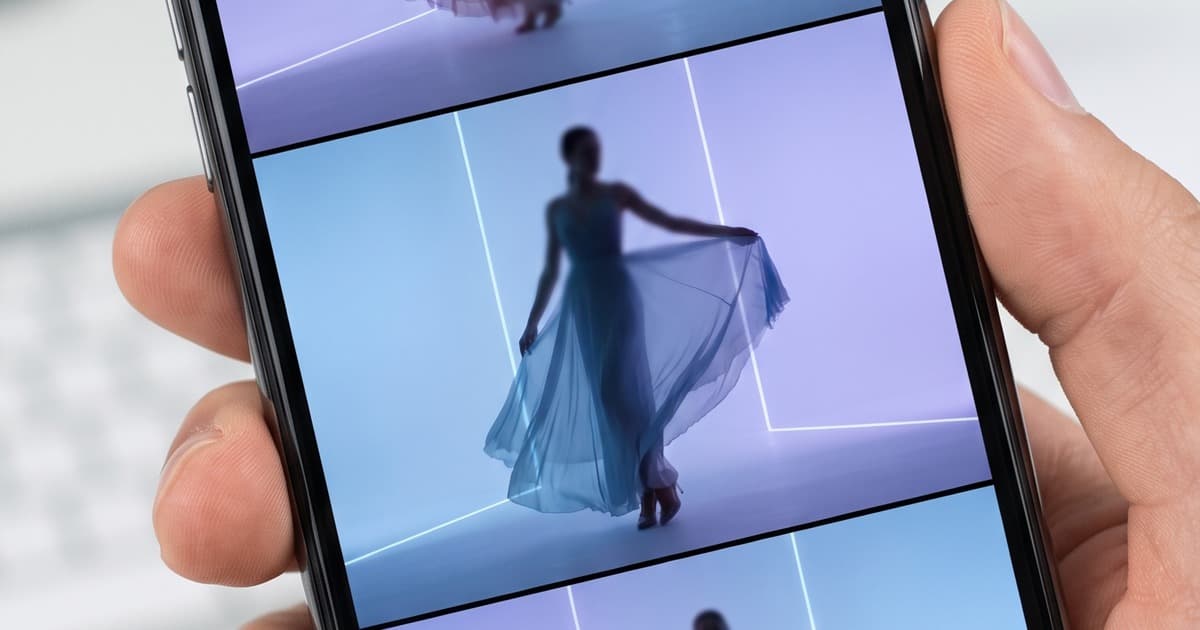
Video ads are now the baseline for fashion ecommerce performance. Instagram Reels, TikTok, Meta Stories, YouTube Shorts — every high-intent channel is video-first. But the dirty secret of paid social in fashion is that most brands can't keep up with the volume that actually drives results.
A single Meta campaign running across 10 ad sets, testing 5 creatives each, with seasonal refreshes every 4–6 weeks? That's dozens of video assets per month — minimum. Traditional production teams can produce maybe 4–8 hero videos per quarter if they're fast. The math doesn't work.
The brands pulling ahead aren't spending more on production. They're using AI to generate video ad assets directly from product photos — at a pace and price that makes real creative testing possible for the first time.
Here's how it works and what it means for your ad strategy.
Why Video Ads Drive Fashion Purchases (and Why Brands Can't Keep Up)
Fashion is a visual category. Shoppers don't just want to see a product — they want to see it move. Does the fabric drape? How does the silhouette look in motion? Does it look different walking versus standing? These are the questions static images can't answer.
The data backs this up:
- Video ads on Instagram drive 3x more conversions than static image ads for apparel, per Meta's own benchmarks
- TikTok Shop now attributes over 40% of purchase intent in fashion to in-feed video ads
- YouTube Shorts for fashion brands shows average engagement rates nearly double that of traditional display ads
- Shoppers who watch a video are 1.8x more likely to purchase than those who only view static product images
The problem isn't that brands don't know video works. The problem is that producing video at the scale performance marketing actually requires is prohibitively expensive with traditional methods.
What a Traditional Fashion Video Ad Production Looks Like
A single video ad shoot for a fashion brand typically involves:
- Pre-production: Creative brief, storyboard, casting, location scouting — 2–3 weeks minimum
- Production day: Director, DP, camera crew, lighting, sound, stylists, hair/makeup, models, production coordinator — typically €3,000–€8,000 per day
- Footage captured: 2–4 finalized ad variations per shoot day if it goes well
- Post-production: Editing, color grading, music licensing, caption overlays — another €500–€2,000 per video
- Total: €4,000–€10,000+ for a handful of video ads
And that's before you consider reshoots, usage rights, seasonal refreshes, and the fact that any single video creative has a finite lifespan before ad fatigue sets in.
This model works for brand campaigns and hero content. It doesn't work for the always-on, high-volume creative testing that performance marketing requires.
What AI Video Ad Generation Actually Does
AI video ad tools (like those built into Tellos AI Video Studio) take a fundamentally different approach: start with your product photos and generate video from them.
The workflow looks like this:
- Upload product images — flat lays, on-model stills, or both
- Select output format — vertical 9:16 for Reels/TikTok/Stories, square 1:1 for Meta feed, horizontal 16:9 for YouTube
- Choose motion style — subtle fabric movement, editorial walk, dynamic zoom, lifestyle movement
- Generate — the AI creates a video clip showing the garment with realistic model movement and natural fabric physics
- Add finishing layer — text overlays, brand colors, CTA buttons, music (licensed library or your own)
- Export ready-to-upload — platform-spec files for Meta Ads Manager, TikTok Ads, YouTube
The output isn't a slideshow with ken burns effects. It's genuine motion video: models moving naturally, fabric draping realistically, products showcased as they'd look in a proper lifestyle shoot — generated from a single product photo in minutes.
For fashion brands, this changes the economics completely. What used to cost €5,000 and take 3 weeks can now be produced for a fraction of the cost in an afternoon.
The Formats That Matter: Where Fashion Video Ads Perform
Different platforms require different video specs and creative approaches. Here's what's working in 2026:
Instagram Reels and Stories
Format: 9:16 vertical, 15–30 seconds for Reels, 15 seconds for Stories What works: Editorial movement, bold fashion moments, fast-cut transitions between looks, strong first 3 seconds AI advantage: Generate vertical-native content from horizontal product shots — no awkward cropping. Match the native Reels aesthetic with natural model movement.
Reels ads that start mid-action (model walking, fabric billowing, a hand adjusting a collar) outperform those that open on a static shot. AI motion generation makes this the default rather than a costly extra.
TikTok In-Feed Ads
Format: 9:16 vertical, 15–60 seconds What works: Raw and energetic aesthetic, fast transitions, on-screen text driving urgency, trending audio AI advantage: Generate high-volume TikTok-native content without needing a TikTok-native production team. Create 10 variations testing different motion styles, overlay copy, and CTAs.
The TikTok algorithm rewards creative diversity — brands that test more variations find winning creatives faster. AI makes it economically viable to test at that cadence.
Meta Feed (Facebook and Instagram)
Format: Square 1:1 or 4:5 vertical for feed, 9:16 for Stories What works: Lifestyle context, clean aesthetic, clear product focus, text overlays that work with sound off (many users scroll muted) AI advantage: Batch-generate lifestyle video from product photos at consistent brand quality. No reshoots needed when creative gets stale — just regenerate with a different motion style or background.
YouTube Shorts
Format: 9:16 vertical, under 60 seconds What works: Styled looks, editorial movement, outfit breakdowns, "how to style" content AI advantage: Create multiple short-form variations from lookbook assets without an additional shoot.
Creative Testing at Scale: Why 10 Variations Beats 1 Hero Video
Performance marketers know that the single biggest lever on paid social is creative. The algorithm doesn't care which ad you think is best — it optimizes for what actually converts. And you can't know what converts until you test.
The traditional model forces a false choice: spend €8,000 on a beautiful hero video and run it until it burns out, or don't run video at all. Neither approach is optimal.
The AI-enabled approach: generate 10 creative variations for the same product and let the algorithm tell you what works.
Here's what meaningful creative testing looks like in practice:
| Variable | Option A | Option B | Option C |
|---|---|---|---|
| Motion style | Editorial walk | Dynamic zoom | Fabric close-up |
| Overlay text | "New in: [product name]" | "Free shipping over €75" | No text |
| Background | Lifestyle / street | Clean white studio | Architectural / minimal |
| First frame | Mid-motion model | Product detail | Full look |
| CTA | "Shop now" | "See the full look" | No CTA overlay |
Each of these variables can be tested with AI-generated assets at the same cost it previously took to produce a single video. Brands that run structured creative tests like this typically see 30–60% improvements in ROAS within the first 6–8 weeks of switching to the model.
Production Cost Comparison: Traditional vs AI
Let's run the numbers for a fashion brand running a quarterly campaign across Instagram and TikTok, targeting 5 product lines with 4 video variations each (20 videos total):
Traditional Production
| Cost Item | Per Video | 20 Videos |
|---|---|---|
| Director + DP | €800 | €16,000 |
| Models (2-3) | €600 | €12,000 |
| Studio / location | €400 | €8,000 |
| Hair + makeup | €300 | €6,000 |
| Post-production | €500 | €10,000 |
| Total | €2,600 | €52,000 |
Assumes batch production with some shared days — a realistic optimistic estimate.
AI Video Generation
| Cost Item | Per Video | 20 Videos |
|---|---|---|
| Platform/generation cost | €25–75 | €500–1,500 |
| Creative direction time | €50 | €1,000 |
| Music licensing | €10 | €200 |
| Total | ~€85–125 | ~€1,700–2,700 |
The savings aren't incremental. They're transformational. And those freed-up budget dollars go back into media spend — where they can actually drive returns.
This is why fashion video content at scale is now within reach for brands that previously couldn't compete on video volume. The barrier was never creative skill — it was production economics.
The Ad Fatigue Problem (and How AI Solves It)
Every paid social manager knows the feeling: a creative that was crushing it at a €2 CPC starts climbing to €4, then €6. Click-through rates drop. The algorithm starts pulling spend. The creative is burned.
Ad fatigue is inevitable. What varies is how fast brands can respond to it.
With traditional production, replacing a burned creative takes 3–6 weeks (brief → shoot → edit → upload). By the time the new asset is live, you've burned money on a declining creative and potentially lost momentum.
With AI generation, refreshing a burned creative takes an afternoon. Upload the same product, generate a new motion style, swap the overlay text, export, and upload. The new creative is live the next morning.
Better yet: pro-active refresh. Instead of waiting for fatigue to hit, schedule a creative refresh every 4 weeks as standard practice. Generate a new batch of variations, swap them in while your current winners are still performing. The algorithm stays warm, your CPCs stay low.
This kind of production rhythm was previously only available to brands with dedicated in-house creative teams. AI makes it the default operating model for any fashion brand, regardless of size.
Maintaining Brand Consistency Across AI-Generated Video Ads
One of the common concerns about AI-generated video is visual consistency. If every ad is generated separately, do they actually look like they belong to the same brand?
The answer is yes — when you set up your generation parameters correctly. Consistent fashion photography at scale has always been one of AI's core advantages, and that principle extends to video.
Consistency parameters to lock in:
- AI model appearance: same virtual model across all ads in a campaign
- Lighting style: consistent warm/cool/neutral lighting that matches your brand aesthetic
- Background settings: consistent environments (studio, lifestyle location, editorial backdrop)
- Motion style: brand-specific movement that becomes recognizable (editorial pace vs dynamic vs aspirational)
- Color grading preset: consistent grade applied to all generated videos
When these are locked, a batch of 20 AI-generated videos for a campaign will have the same visual coherence as assets shot by a top production team — without the logistics of ensuring every shoot day matches.
Integrating AI Video Ads into Your Marketing Stack
AI video generation doesn't exist in isolation. It needs to fit into your existing campaign workflow. Here's how successful fashion brands are integrating it:
From Catalog to Ads in One Motion
The most efficient workflow starts from your existing product photography. If you're already using AI to generate your lookbook and catalog content (and if you're not, see AI model videos on product pages), your ad creative generation is essentially an extension of that same process.
Same product images → lookbook-quality stills → on-model video for PDPs → ad-ready video for paid social. One asset creation session fuels your entire visual ecosystem.
Creative Brief → Campaign Structure → Generation
Treat AI video generation the same way you'd treat a production brief:
- Define the campaign: season, product focus, target audience
- Map variables to test: motion styles, copy, format, first frame
- Generate in batches: all 20 variations in one session
- QC and select: quick review pass, discard any that don't meet bar
- Upload to ads manager: structured naming convention, organized into ad sets
- Establish refresh cadence: calendar reminder every 4 weeks for new batch
This is a repeatable system, not a one-off project. Once your team runs it twice, it becomes muscle memory.
Connecting to Your DAM and Shopify
AI-generated video assets should flow into your digital asset management system the same way any other creative does. Tag by product, season, format, and variation number. Make them searchable and reusable.
For Shopify brands, the same video assets that run as ads often work equally well as on-model videos on product detail pages — creating a seamless experience from the first ad touchpoint to the final purchase decision.
What AI Video Ads Can't Do (Yet)
Being realistic matters here. AI video ad generation is powerful but not unlimited.
Complex narrative storytelling: Long-form brand films with character arcs, dialogue, and cinematic production value still require human direction and shooting. AI excels at product-focused performance creatives, not 60-second brand documentaries.
Celebrity and influencer content: AI can generate beautiful model video, but it can't replicate a specific public personality or influencer relationship. Influencer-led content still requires human talent.
Highly specific scenarios: If your creative calls for "model surfing in the jacket at sunrise in Malibu," AI can approximate it — but you may get more predictable results from a lifestyle shoot for very specific set pieces.
Sound-design-led concepts: If the creative concept is built around a specific piece of music with choreography matched to the beat, AI generation gives you the visual layer but music integration and timing still require editing time.
For performance video ads — the bread-and-butter of paid social for fashion brands — none of these limitations matter. You need products shown clearly, in motion, in the right format. AI handles that completely.
Getting Started: Your First AI Video Ad Batch
If you're new to AI video ad generation, here's a practical starting point:
Week 1: Single product, single format
- Pick your best-selling product
- Generate 4–6 variations for Instagram Reels (9:16)
- Test: 2 motion styles × 2 overlay copy variations = 4 ads
- Set a €500 test budget, let it run 10–14 days
- Establish your baseline CPCs and ROAS
Week 2: Expand to multi-format
- Take the winning Reels creative, adapt format for TikTok and Meta feed
- Generate 2–3 variations per platform
- Compare platform-level performance
- Identify which motion style translates best across platforms
Week 3: Scale to product range
- Apply your winning formula (motion style, copy framework, format) to your top 5 products
- Generate 3–4 variations each = 15–20 total video ads
- Launch as a proper multi-product campaign with structured ad sets
Ongoing: Refresh cycle
- Every 4 weeks: pull performance data, identify fatiguing creatives, generate replacements
- Seasonal refresh: new batch aligned to collection launches (see seasonal lookbook production for content planning approach)
- Evergreen assets: maintain a library of top-performers that can be recycled across different campaign objectives
This structured approach turns AI video generation from a tactical experiment into a core part of your performance marketing infrastructure.
The Competitive Advantage Window
There's a window here. Most fashion brands are still working from the old model — expensive production, limited volume, slow refresh cycles. The brands that adopt AI video generation now are running 10x the creative tests, refreshing 4x as often, and reaching conversion-rate optima that their competitors can't match because they literally don't have the creative inventory to test.
That window will close. As AI video generation becomes table stakes, the advantage will shift back to pure media buying skill and brand strength. But right now, in 2026, the brand that commits to AI-generated video ad production is playing a different game than the one still booking shoot days.
The cost of entry is low. The upside is significant. The only question is when you start.
Start Creating AI Video Ads with Tellos
Tellos AI Video Studio lets fashion brands generate scroll-stopping video ads from product photos — across every format, at any scale, in a fraction of the time and cost of traditional production.
No crew. No shoot days. No production delays. Just ready-to-run video ads for Instagram Reels, TikTok, Meta, and YouTube Shorts, generated directly from your product catalog.