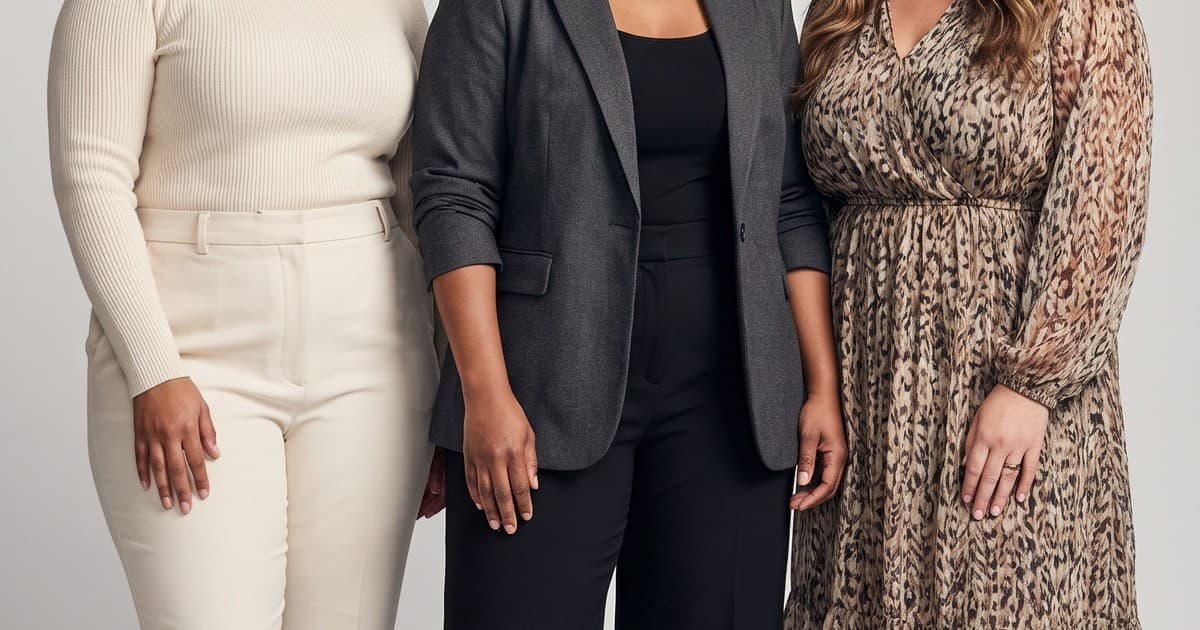
Plus-size representation on the runway just hit its lowest point in three years of tracking: 0.3% of Fall/Winter 2026 looks across New York, London, Milan, and Paris. Meanwhile the plus-size clothing market is worth $317 billion in 2026 and growing at over 5% a year. That gap between demand and visual representation is the single biggest unsolved problem in extended-size ecommerce, and it's costing brands sales every day.
If you sell sizes 14 and up, you already know the sizing part isn't the hard part anymore. You've built the size curve, sourced the fabric, graded the patterns. The part that's still broken is showing shoppers what those sizes actually look like on a body like theirs - without booking a studio day for every size in every color, every season.
This is where AI fashion photography changes the math for extended-size brands specifically, more than almost any other category.
Why Extended Sizing Has a Unique Visual Problem
Most fashion categories can get away with shooting one sample size and letting shoppers "imagine" the fit. Plus-size and extended-size brands can't. The research on this is blunt: a 2024 study in the Journal of the Academy of Marketing Science identified what researchers call the "Dissimilarity-Risk Deterrence Effect" - when a shopper's body size differs significantly from the model's, they perceive higher fit risk, hesitate to buy, and return items at higher rates when they do. Seeing a model closer to your own size measurably increases purchase confidence.
That's not a nice-to-have. It's the core conversion lever for this category.
But traditional production makes it nearly impossible to act on:
- Sample costs scale with size. Above roughly US size 18, garments require more fabric, different pattern grading, and often separate design adjustments - so a "one sample, one shoot" workflow doesn't reflect what larger sizes actually look like on the body.
- Casting is expensive and thin. Plus-size and extended-size models are a smaller, higher-demand talent pool. Booking multiple body types for a single catalog shoot multiplies day rates fast.
- Brands need a range of sizes shown, not one. A size 16 and a size 26 fit and drape differently. Showing only your smallest "plus" sample and calling it representative is exactly the practice that erodes shopper trust.
- The market punishes brands that don't commit. Industry buyers note that when extended sizes are under-marketed or shown inconsistently, they under-sell relative to demand - not because shoppers don't want them, but because they can't see themselves in them.
The result: many extended-size brands either shoot one plus-size model per collection as a token gesture, or skip on-model plus-size imagery entirely and rely on flat lays and ghost mannequins. Both options leave money on the table.
What AI Photography Actually Solves Here
AI fashion photography platforms - Tellos included - separate the garment from the model. You upload a flat-lay or a single reference photo of the piece, and the platform renders it on a range of AI-generated bodies: different sizes, heights, skin tones, and proportions, all from the same source image.
For extended-size brands, that unlocks a few things traditional photography structurally can't do at the same cost:
1. Show the Full Size Curve, Not Just One Sample
Instead of shooting a single "plus" sample and hoping it generalizes, you can generate on-model images across your actual size range - a 14, an 18, a 24, a 28 - showing how the same garment drapes, stretches, and sits at each point on the curve. This directly targets the Dissimilarity-Risk Deterrence Effect: shoppers see a body closer to theirs and buy with more confidence.
2. Cut the Cost Barrier That Keeps Brands From Trying
Casting five different body types for a single shoot day is a five-figure problem for most mid-size brands. Generating five body types from one photographed sample is a software problem. This is exactly why so many brands quietly abandon extended sizing after a season or two when the marketing spend doesn't scale with the size range - AI removes that cost cliff.
3. Keep Pace With Seasonal Drops
Extended-size collections often launch late relative to core sizing, or get thinner marketing support because there's no budget left after the main shoot. AI-generated content means the plus-size range gets the same volume of PDP images, social content, and lookbook pages as your straight-size line - not leftovers.
4. Test Before You Commit Production Budget
Some brands use AI-generated visuals to gauge demand signal on a potential size extension before fully committing inventory - lower risk than a full photoshoot for a range that might not sell through.
5. Maintain Visual Consistency Brand-Wide
A recurring complaint from plus-size shoppers is that extended sizes look visually "bolted on" - different lighting, different backdrop, different photography style than the core line. AI platforms that reuse a consistent studio setup, lighting profile, and background across every size and SKU solve this automatically, because it's the same generation pipeline for every image.
The Data Behind the Opportunity
It helps to look at the numbers side by side, because the disconnect between runway visibility and market size is stark:
- Runway representation is shrinking. Plus-size looks made up 2.8% of runway castings in Spring/Summer 2020. By Spring/Summer 2025, that had fallen to 0.8%. Fall/Winter 2026 data shows plus-size representation at just 0.3% of looks across the four major fashion weeks - the lowest level tracked in three years of industry monitoring.
- The market is enormous and still growing. Multiple market research firms independently size the global plus-size clothing market between $315 billion and $333 billion in 2025-2026, with forecasts reaching $417 billion to $532 billion by the early 2030s - a compound annual growth rate consistently above 5%.
- Shoppers feel the sizing gap directly. In a Vogue Business survey of nearly 700 consumers, 48% said they feel pressure to lose weight in order to feel fashionable, and the majority of those respondents pointed to shopping and sizing challenges - not runway shows or ad campaigns - as the source. More than a quarter of plus-size respondents said they "can never" or "usually can't" find their size at luxury brands.
- The US average body size has shifted. The average American woman now wears between a size 16 and 18, up from size 14 a decade ago - meaning "extended sizing" increasingly describes the actual average customer, not a niche.
- When brands commit, it works. Inclusive label Ester Manas reports that 60-70% of its ecommerce customers are plus-size, a figure the brand attributes directly to consistent product availability paired with dedicated imagery and storytelling for that size range.
Put those together and the picture is clear: representation is going in one direction, the addressable market is going in the other, and the brands that close that gap first - visually, not just in inventory - get first pick of a customer base that has been chronically underserved online.
Why "Just Add the Sizes" Doesn't Fix It Alone
A common mistake is treating size inclusivity as purely an inventory decision: add the SKUs, extend the size chart, done. But buyers and casting professionals who work in this space consistently point to the same failure mode - brands extend their size range, get underwhelming early sales because shoppers can't picture the fit, and pull the sizes back within a season or two, concluding (incorrectly) that "demand isn't there."
Style Arcade's CEO Michaela Wessels puts a number on this: if the end sizes of your size curve represent more than 15% of total sales in a typical seven-size range, there's a real opportunity to extend further - but that opportunity only converts if shoppers can actually evaluate fit before buying. Return-rate data backs this up as the tell: fit-related returns spike specifically when a size range is added without matching visual support, because shoppers are guessing rather than seeing.
This is the exact mechanism the "Dissimilarity-Risk Deterrence Effect" research describes - and it's also exactly the gap AI photography is positioned to close, because it decouples "how many sizes can we visually represent" from "how many models can we book and how many studio days can we afford."
Where This Fits Across Your Funnel
Extended-size visual representation isn't a PDP-only problem - the same imagery gap shows up everywhere a shopper evaluates fit:
- Product detail pages. The highest-leverage placement. Every size point in your curve should have on-model imagery, not just your smallest "plus" sample stretched across a size range it was never shot for.
- Category and collection pages. If your extended sizes only appear in a dedicated "plus" collection with different photography, you're reinforcing the "bolted on" perception. Mix sizes into your main collection imagery.
- Paid social and ads. Plus-size and mid-size representation in ad creative converts better with the audience it's speaking to - and testing multiple body-type variants in ad creative is only affordable at AI-content cost, not studio cost.
- Email and lifecycle marketing. Cart abandonment and browse-abandonment emails for extended sizes can show the shopper's approximate size point instead of a generic hero image, closing the exact fit-confidence gap that caused the hesitation in the first place.
- Wholesale and marketplace listings. Buyers evaluating a size-inclusive line sheet want to see the size range represented, not inferred - this matters for line sheets and marketplace catalogs as much as DTC.
What to Get Right (So It Doesn't Backfire)
Size inclusivity is a trust category. If AI-generated plus-size imagery looks generic, distorted, or like a straight-size body with a filter applied, you'll do more damage than shooting nothing at all. A few non-negotiables:
| Get this right | Why it matters |
|---|---|
| Accurate body proportions per size, not a scaled-up thin body | Distorted proportions read as inauthentic instantly to plus-size shoppers |
| Garment fit and drape that matches real fabric behavior at that size | Stretch, cling, and fold behave differently at different sizes - generic draping breaks trust |
| Diverse body shapes within "plus," not one plus-size archetype | Plus-size bodies vary as much as straight sizes; one repeated body type is its own form of tokenism |
| Consistent lighting/background with your core-size content | Visually separate treatment for plus sizing reads as an afterthought |
| Clear AI-content labeling per emerging disclosure norms | Regulations like the EU AI Act and California SB 942 are pushing toward mandatory AI-image labeling - build the habit now |
This is also where working with a platform that supports fine-grained body attribute control matters more than for straight-size content. You need real control over body type, height, and proportion - not a single "plus" toggle.
A Practical Workflow for Extended-Size Brands
- Photograph or flat-lay each garment once. One clean reference shot per SKU, same as any AI photography workflow.
- Generate across your actual size curve, not just your smallest plus size. If you sell 14-28, show meaningfully different points across that range, not just the low end.
- Batch by category first. Start with your highest-return-rate categories - fitted knits, denim, swimwear, anything where fit anxiety drives hesitation - since that's where size-accurate visuals move conversion fastest.
- A/B the size-range imagery against your current single-sample content on a handful of PDPs before rolling out brand-wide. Watch add-to-cart rate and return rate, not just clicks.
- Refresh every season without a re-shoot. Once you have the workflow, updating imagery for new colorways or seasonal drops across every size point is a re-generation, not a re-shoot.
For more on how AI visuals affect return rates specifically, see our breakdown in AI Product Videos for Swimwear Brands: Handling Fit and Fabric Movement, where the same fit-confidence mechanics apply to a different high-return category.
It's also worth being clear about what AI photography is and isn't: models like Sora, Kling, and Runway are the underlying generative technology that platforms build on top of, not competitors to a production workflow. A platform like Tellos handles the fashion-specific layer on top - consistent brand identity, accurate garment rendering, size and body controls, and a workflow built for catalogs rather than one-off clips.
The Bottom Line
The plus-size and extended-size market is growing faster than the industry's visual representation of it. That gap is a genuine opportunity: brands that can affordably and authentically show their full size range will out-convert competitors who still treat plus-size as an afterthought shoot. AI fashion photography is what makes "affordably" possible - it's the only way to shoot every size, every SKU, every season without your production budget scaling in lockstep with your size curve.
If you're extending your size range or want your existing extended sizes to finally get the visual treatment they deserve, see how it works with your own catalog: Tellos AI Video Studio.