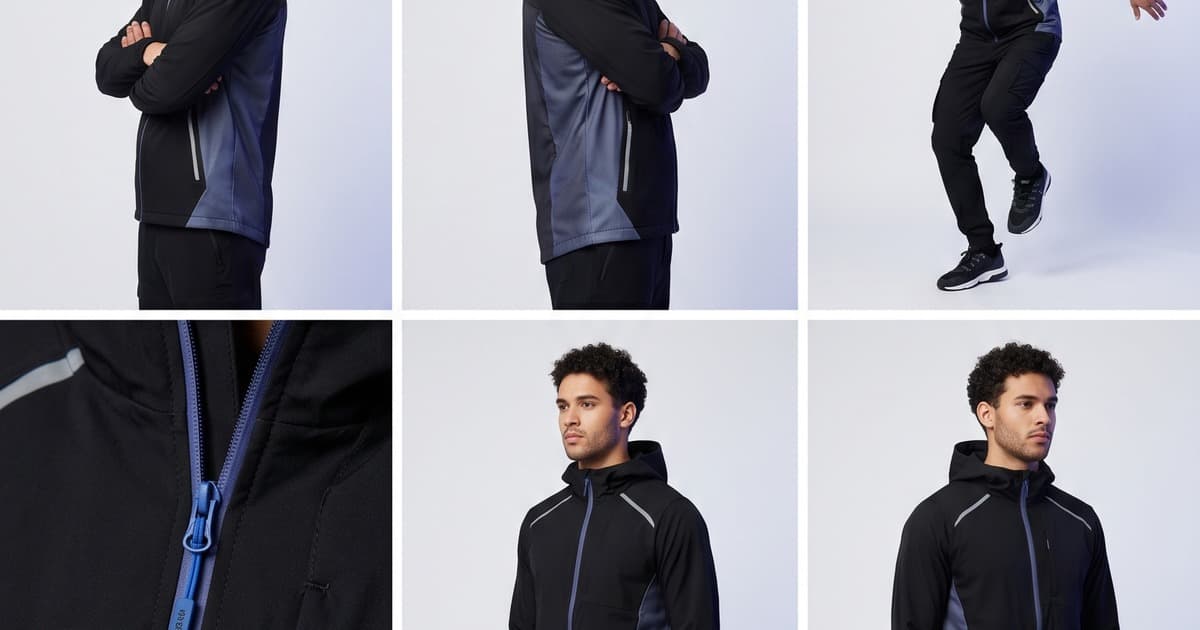
Scroll through almost any mid-sized fashion brand's product catalog and you'll notice something off. One jacket is shot in warm studio light. The next is photographed outdoors on an overcast day. The third uses a different model entirely. Backgrounds shift. Skin tones are processed differently. The sizing feels inconsistent.
The catalog technically shows your products—but it doesn't look like a brand. It looks like a collection of separate shoots stitched together. Because it is.
This is one of the most persistent, most expensive, and most overlooked problems in fashion ecommerce: visual inconsistency at scale. And it's finally being solved by AI.
Why Traditional Catalog Shoots Fail at Consistency
It sounds straightforward: book a studio, a photographer, and some models. Shoot your collection. Done.
The problem is that fashion catalogs don't happen in a single day—and they rarely involve a single anything. Here's what actually happens across a typical brand's year:
- Multiple shoot days spread across months, often with different photographers or assistants
- Changing studio setups as teams move between locations or upgrade equipment
- Different model bookings for each shoot day—agencies rarely guarantee the same face twice
- Evolving post-production as editors come and go, or simply develop their style over time
- Season-to-season drift as the brand's aesthetic slowly shifts without a deliberate reset
The result: summer collection was shot by one photographer in a rented warehouse, fall was shot by another in a daylight studio, and winter used a third-party agency entirely. Your customer sees all three side by side in the "All Products" view—and the brand doesn't hold together.
The Real Cost of Inconsistency
Beyond aesthetics, inconsistency has direct business impact:
Lower conversion rates. Shoppers make purchasing decisions partly on visual trust. When photos look inconsistent, the implicit message is that the brand is inconsistent—unprofessional, or small. Doubt kills conversions.
Higher return rates. Inconsistent lighting and color grading mean the same garment can look like two different products depending on which image a customer sees. Returns spike when product expectations don't match reality.
Weaker brand equity. Fashion is aspirational. Aspirational brands look deliberate—every image feels intentional. Inconsistency breaks that spell.
Wasted retouching budget. Post-production teams end up doing double work: not just retouching, but trying to harmonize images shot under wildly different conditions. That's time and money that shouldn't need to exist.
What "Consistent" Actually Means in Fashion Photography
Before getting into AI, it helps to be specific about what consistency requires. It's not just "same background color." True catalog consistency involves:
1. Lighting Consistency
Same light quality (hard vs. soft), same direction, same color temperature, same intensity relative to subject. In a real studio, this means identical setup every time—same lights, same positions, same settings, shot at the same time of day if using natural light.
2. Model Consistency
Same model (or models) across the collection, maintaining the same expressions, posture energy, and physical presentation. If the brand uses multiple models for size inclusivity, each model should appear consistently across their portion of the catalog.
3. Background and Environment
Same background color, texture, or setting. Even slight variations in a white background—one warm white, one cool white—read as inconsistency in a product grid.
4. Color Grading
The same post-processing profile applied across every image: contrast, saturation, shadow lift, highlight rolloff. One of the hardest things to maintain across multiple shoots and editors.
5. Crop and Composition
The same framing conventions: how far the model is from the edges, what part of the outfit is centered, whether a full-body or three-quarter crop is used. Inconsistent cropping makes grids look messy.
6. Styling and Prop Rules
If the brand always tucks the hem the same way, or always leaves shoes unlaced in the same manner, that reads as intentional. Random styling breaks the visual language.
Getting all six of these right, reliably, across hundreds of SKUs and multiple shoots—that's the challenge. Traditional production has no easy answer. AI does.
How AI Guarantees Visual Consistency
When you generate product images with AI, you're not calling a different photographer each time. You're running the same process—and that process produces the same output parameters, every time.
Here's how each consistency dimension maps to AI generation:
Lighting: Set Once, Apply Everywhere
In traditional photography, lighting is physical—you're arranging actual lights and trying to recreate conditions from memory. In AI generation, lighting is a parameter. Whether it's a soft north-light studio look or a warm golden-hour outdoor aesthetic, the same prompt or style profile produces the same result for every single garment you process.
No setup. No drift. No "close enough."
Models: Unlimited Availability, Zero Variability
AI model casting solves one of the most frustrating consistency problems in traditional shoots: model availability. Human models have schedules, conflicts, and—over time—physical changes. Agencies can't guarantee the same model for your June shoot and your September reshoot.
With AI, you select a model (or define a model's characteristics) and use her—or him, or them—for every product in your catalog, every season, every year. The same face, build, and energy. The same posture range. Always available. No cancellations.
Background and Environment: One Profile, All Products
Define a background once—white seamless, light gray, outdoor urban, lifestyle kitchen—and apply it identically to 10 products or 1,000. The AI doesn't interpret your background description differently on a Tuesday. What you specify is what you get, at scale.
Color Grading: Baked into the Process
AI image generation doesn't separate shooting from post-processing. The color rendering, contrast handling, and tonal palette are part of the generation itself. Once you've dialed in a look, every output from that model profile carries it automatically.
For brands with specific aesthetic guidelines—muted Scandinavian tones, vivid streetwear saturation, high-fashion desaturated neutrals—AI respects those guidelines at the generation stage, not the retouching stage.
Cropping and Composition: Structural by Default
AI systems can be instructed to produce consistent framing: full-body, three-quarter, above the knee, portrait orientation at 2:3 ratio. This is structural output, not editorial judgment made shot-by-shot. Every image conforms to the brief automatically.
Brand Guidelines Enforcement at Scale
One of the underrated benefits of AI-generated catalog photography is how it turns brand guidelines from a document into a live constraint.
Traditional brand guidelines exist on paper. They get distributed to photographers, reviewed in pre-production, and then... interpreted. Every creative brings their own judgment. The guidelines say "natural light feel" and one photographer renders that differently than another.
With AI, brand guidelines become operational parameters. If your brand has decided:
- Model demographics: diverse casting across three distinct model profiles
- Background: natural linen-textured cream, not stark white
- Lighting: simulated overcast daylight, soft shadows
- Crop: full-body with 15% headroom
- Mood: relaxed, approachable—no aggressive poses
…these aren't preferences you hope the team executes. They're inputs the system applies every time. The brand is enforced at the generation level, not policed in post-production review.
This is especially powerful for larger catalogs. Reviewing 50 photos for guideline adherence is manageable. Reviewing 500 is not. When AI generates to the guidelines, review becomes confirmation rather than correction.
Consistency Across Multi-Brand or Multi-Line Catalogs
Large fashion businesses often manage multiple brands or distinct product lines—different aesthetics, different audiences, different visual languages. Keeping each line visually distinct while maintaining internal consistency across each one is a challenge that compounds quickly.
AI handles this with profiles. Each brand or line has its own generation parameters: model profile A for the premium line, model profile B for the everyday range, different background treatment, different lighting character. Process 300 items through the premium profile and 400 items through the everyday profile. Each set is internally consistent. Neither bleeds into the other.
For traditional production, achieving this would require strict production separation—different photographers, different studios, different post-production pipelines. Expensive, logistically complex, and still prone to drift.
Consistency Over Time: Seasonal Updates Without Starting Over
One of the most compelling consistency wins from AI is what happens between seasons.
Traditional catalog consistency often resets with each season. New photographer relationships, updated studio, different models due to availability—and suddenly your Fall catalog looks like a different brand than your Summer one. Long-time customers notice, even if they can't articulate it.
With AI, seasonal updates happen on top of established profiles. You're adding new products to an existing visual system, not rebuilding from scratch. The Fall catalog can feel like a coherent evolution of Summer—same model family, same lighting character, evolved context or color story.
This is how magazine editorial teams think about their book: consistent identity with seasonal evolution. AI gives that capability to ecommerce brands of any size.
Seasonal lookbook production with AI explores this timeline advantage in more detail—but the consistency dimension is just as significant as the speed.
The Conversion Argument for Visual Consistency
Conversion rate optimization in fashion ecommerce tends to focus on things like page speed, UX, and copy. Visual consistency deserves to be in that conversation.
Research and practitioner evidence consistently points to the same finding: trust drives conversion. Visual polish signals trustworthiness. Consistency is a core component of polish.
Some specific conversion levers:
Grid performance. Category page grids convert better when images feel cohesive. Shoppers scan grids visually before engaging with individual products. A harmonized grid encourages deeper browsing. A disjointed one creates friction.
Color accuracy perception. Consistent color grading means customers trust that the color they see is the color they'll receive. Inconsistent color treatment creates uncertainty, which creates hesitation, which kills conversion.
PDP (product detail page) trust signals. When all the images on a PDP were generated with the same parameters—lighting, model, background—the product feels considered and intentional. When one hero shot looks completely different from the secondary images, the page feels unfinished.
Return rate reduction. Accurate, consistent product representation reduces the gap between expectation and reality. Returns drop when customers receive what they expected to receive.
Practical: How Consistent AI Production Scales
Let's look at what this actually looks like in production terms.
| SKU Count | Traditional Shoot Days | Traditional Inconsistency Risk | AI Generation Time | Consistency Level |
|---|---|---|---|---|
| 50 SKUs | 1–2 days | Low (single shoot) | 2–4 hours | Guaranteed |
| 150 SKUs | 3–5 days | Medium (multiple sessions) | 4–8 hours | Guaranteed |
| 500 SKUs | 10–15 days | High (weeks of production) | 1–2 days | Guaranteed |
| 1,000+ SKUs | 30+ days | Very high (multiple teams) | 3–5 days | Guaranteed |
The traditional inconsistency risk grows linearly with scale. AI consistency doesn't degrade at scale—it's inherent to the process.
For brands operating at 500+ SKUs, the consistency case for AI may be even more compelling than the cost case. Achieving true visual cohesion across that volume traditionally would require a level of production control most brands can't afford or sustain.
What Consistency Looks Like on the Brand Side
A few patterns that emerge when brands shift to consistent AI-generated catalogs:
Fewer customer service inquiries about product appearance. "Is this really the color I'll receive?" questions drop when color grading is stable and accurate.
Simpler social media content repurposing. When all product photos share the same visual language, pulling them into Instagram grids, ads, and email campaigns is frictionless. The fashion brand content calendar benefits enormously from a consistent photo asset library.
Easier wholesale presentations. Buyers reviewing a line sheet or wholesale catalog immediately read visual consistency as brand maturity. It signals that the brand is ready to partner at scale.
More confident brand direction. When you've committed to a visual system and AI enforces it reliably, brand decision-makers spend less time troubleshooting production drift and more time thinking about creative evolution.
When Consistency Has Limits (and What to Do About It)
AI consistency is powerful but not magic. A few honest caveats:
The first generation pass matters most. If the initial brief or prompt is vague, the AI will produce outputs that are consistent with each other but not necessarily ideal. Invest time in defining the visual system upfront—model selection, lighting brief, background, crop rules. That investment pays back across every SKU.
Brand evolution requires a deliberate profile update. When a brand refreshes its aesthetic, the AI parameters need to be updated accordingly. This is straightforward, but it's a step—you can't assume the system will self-update.
Complex styling still benefits from human direction. For highly styled editorial content—layered looks, specific garment interactions, complex accessory pairings—some human creative direction at the brief stage improves output. The AI executes; the human directs.
None of these are reasons to avoid AI for catalog consistency. They're reasons to treat the AI generation brief as seriously as you would a pre-production meeting with a photographer.
The Bottom Line
Fashion brands have accepted catalog inconsistency as a cost of doing business at scale. It doesn't have to be.
AI-generated product photography doesn't just reduce costs or speed up production—it resolves a structural problem that traditional production has never fully solved. Consistent lighting, consistent models, consistent color grading, consistent composition, across every SKU, every season, every update.
For ecommerce brands, that consistency translates directly into conversion, reduced returns, and brand equity that builds over time instead of fragmenting across production cycles.
The technology is available now. The brands adopting it aren't just getting more efficient—they're building catalogs that look like they came from a brand with a real creative vision. Because they did.
See It in Action with Tellos
Tellos AI Photo Studio lets you generate consistent, on-model product photography at scale—same visual system, every image, every SKU. Define your brand's look once and apply it across your entire catalog.
No studio coordination. No model rebooking. No post-production firefighting to harmonize photos shot three months apart.
Ready to see what a consistent catalog looks like for your brand? Explore Tellos AI Video Studio and book a demo to see consistent AI catalog production in action.