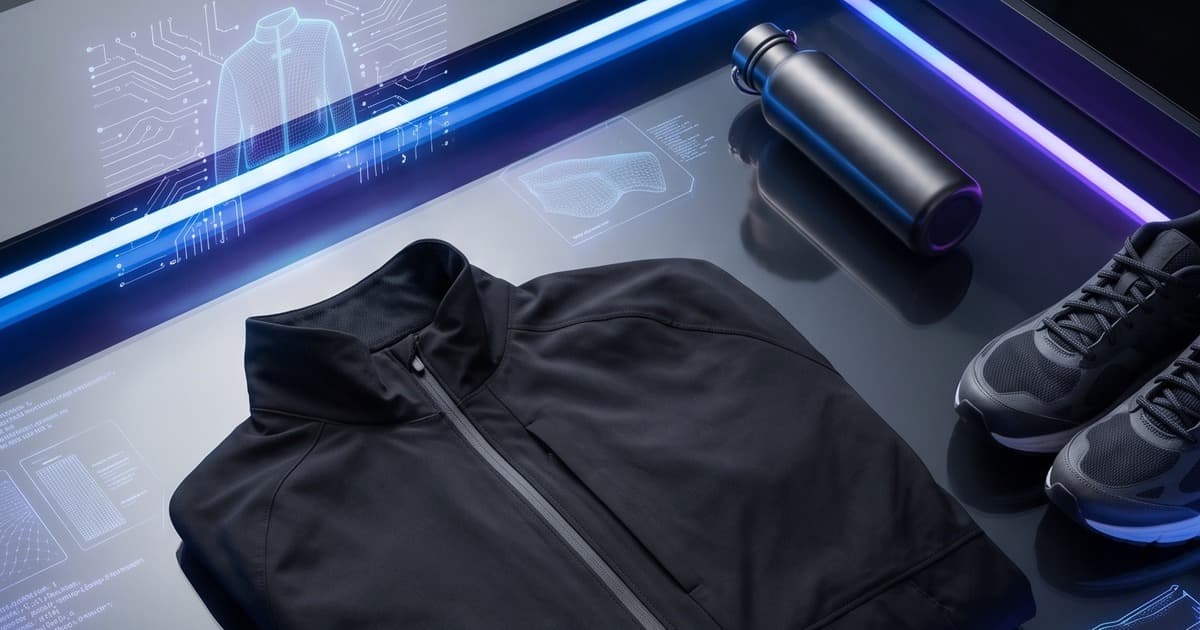
Running a fashion brand on Shopify in 2026 without AI is like running a photo shoot without lighting. Technically possible. Competitively suicidal.
Every part of the stack has been disrupted: how you create content, how you write product copy, how you predict inventory, how you personalize the browsing experience. The brands winning right now aren't the ones with the biggest budgets — they're the ones who figured out which tools to use, and how to string them together.
This post breaks down the best AI tools for Shopify fashion brands by category, with honest pros and cons for each. We'll also show you where Tellos fits — and why for content creation specifically, it's become the default for fashion operators who want photos, videos, and shoppable feeds without spinning up five different tools.
Why AI tools matter more in fashion than almost any other vertical
Fashion is uniquely content-hungry. A single product launch might need:
- 10–20 product images (multiple angles, colorways, lifestyle contexts)
- 3–5 short-form videos for TikTok and Reels
- A product description that ranks in search and converts in cart
- Size/fit personalization for each visitor segment
- Inventory signals that tell you how many units to order before the trend peaks
Traditional production workflows can't keep up. A professional photo shoot costs $3,000–$15,000 per day before post-production. Video production costs even more. And both take weeks — by which time the trend has moved on.
AI compresses that timeline from weeks to hours. But the landscape is fragmented. Here's what's worth your attention.
📸 Category 1: AI Photo Generation
Getting product photos that look studio-quality without booking a studio is now genuinely possible. These tools are the most mature in the AI toolkit.
Tellos AI Photo Studio
Tellos is built specifically for fashion ecommerce. Upload your flat lays or ghost mannequin shots and the platform places them on trained AI models in lifestyle contexts — no shoot required.
What makes it different:
- Trained on fashion-specific datasets, so draping, fabric texture, and fit look realistic
- You can swap models across skin tones and body types to diversify your product pages without re-shooting
- Results are production-ready at 2048px+
- Direct Shopify integration — images go straight to your product pages
Best for: Fashion brands doing 20+ SKUs who can't afford per-SKU photo shoot costs
Pros:
- Fashion-trained models (vs. generic image gen)
- Consistent brand output across a whole catalog
- Integrated workflow from flat lay → on-model → product page
Cons:
- Complex multi-piece outfits (layered streetwear, structured tailoring) still need refinement passes
- Custom brand-trained model requires minimum volume
Related: From flat lay to on-model: how AI photo studio works
Midjourney / DALL-E 3 / Firefly
General-purpose image generators. Useful for mood boards, campaign concept visuals, and social content — but not suited for product photography where accuracy matters.
Pros: Fast, cheap, high creative flexibility Cons: No product fidelity. Generated images won't look like your product. Not useful for product pages.
Cala / Pebblely / Pixelcut
App Store tools that handle background removal, background replacement, and basic lifestyle staging. Solid for simple apparel on white backgrounds.
Pros: Easy Shopify App Store installs, affordable Cons: Limited realism for complex garments; no AI model placement
🎬 Category 2: AI Video Creation
Video is now the default product content format. TikTok Shop, Reels, Shorts — every channel rewards video, and brands that only have stills are losing placements they don't even know they're losing.
Tellos AI Video Studio
This is where Tellos really differentiates. Most "AI video for ecommerce" tools are wrappers around a single model (Kling, Runway, Pika, Sora). Tellos is a platform that routes your content through the best model for the job — and adds the ecommerce layer on top.
What that means in practice:
- Upload your product photos → get short-form video clips ready for TikTok, Reels, and ads
- Video outputs are shoppable — product tags, clickable CTAs, and buy links are embedded
- Multi-model routing means you're not locked to one video engine's aesthetic
- Brand voice and style settings carry across all outputs — your videos look like your brand, not generic AI content
Best for: Fashion brands who want a consistent content engine, not a one-off video tool
Pros:
- Shoppable video is built in (huge for TikTok Shop and Shopify)
- Works from existing product photos — no filming required
- Handles TikTok and Reels content at scale
- One platform for photos AND video (massive workflow simplification)
Cons:
- Not the right tool if you need long-form brand films or documentary-style content
Related: AI video studio for ecommerce — create product videos without filming
Kling, Runway, Pika, Sora
These are the underlying AI video models — the engines that power the industry. They're genuinely impressive and worth understanding. Kling in particular has become a go-to for fashion product video generation because of how well it handles fabric motion and garment drape.
The catch: they're raw tools. Using them directly means stitching together your own workflow — prompt engineering, post-production, manual platform formatting, no ecommerce integrations. For operators who want to go deep on custom video production, that flexibility is valuable. For most fashion brands who just need great content out the door, a platform like Tellos that handles the workflow is faster.
Pros: Maximum creative control, cutting-edge output quality Cons: No ecommerce context, no shoppable layer, significant workflow overhead
Creatify / AdCreative.ai
Ad-focused video generators. Good for quickly producing paid social variations (UGC-style, spokesperson, testimonial formats).
Pros: Fast for ad creative testing, decent template library Cons: Generic aesthetic, limited fashion-specific functionality, no product page integration
✍️ Category 3: AI Copywriting
Product descriptions, email subject lines, PDP copy, ad headlines — the writing surface area for a fashion brand is enormous. AI handles the volume.
Shopify Magic
Shopify's built-in AI writing tool. It's right there in the admin — no separate tool to install or pay for. For product descriptions, it's good enough for a first draft that you then edit.
Pros: Native, free, works in the Shopify admin flow Cons: Generic output, limited control over brand voice, not specialized for fashion
Jasper AI
The enterprise copywriting standard. Trained brand voice, team collaboration, templates for every format (product descriptions, emails, ads, social).
Pros: Brand voice consistency at scale, strong template library, integrates with Surfer SEO Cons: Price point ($49+/month) is steep for smaller operators; learning curve
Copy.ai / ChatGPT with custom instructions
For brands that don't need a full-stack copywriting platform, ChatGPT with well-crafted system prompts can generate surprisingly good fashion copy. The trick is building a prompt library that encodes your brand voice, size/fit language, and SEO terms.
Pros: Flexible, low cost, fast for one-offs Cons: No structured workflow, requires ongoing prompt maintenance
Describely / Ablefy
Purpose-built for ecommerce product descriptions. Feed in your product data and they output SEO-optimized descriptions at scale. Some support Shopify bulk imports.
Pros: Bulk generation, structured SEO output, Shopify integration Cons: Not fashion-specific — copy may miss nuanced style language
🎯 Category 4: Personalization
Personalization is where AI closes the gap between a product page and a fitting room. Show the right product to the right visitor at the right moment, and conversion rates move meaningfully.
Nosto
The personalization standard for mid-market fashion Shopify brands. Product recommendations, dynamic content blocks, behavioral segmentation — all powered by real-time onsite behavior.
Pros: Deep Shopify integration, strong recommendation quality, A/B testing built in Cons: Pricing scales up fast with traffic; implementation requires technical resources
Best for: Brands with $3M+ revenue where personalization ROI justifies the investment
LimeSpot
More accessible price point than Nosto. Handles product recommendations, cross-sell/upsell blocks, and basic behavioral personalization.
Pros: Easy Shopify App Store install, affordable for growing brands Cons: Less sophisticated than Nosto at scale
Rebuy Engine
Shopify-native personalization focused on the cart and checkout experience. Smart Cart, post-purchase upsells, and subscription-aware recommendations.
Pros: Cart/checkout focused (high-value conversion point), native Shopify integration Cons: Less focused on browse/discovery personalization
Klaviyo AI
Email-first but increasingly full-funnel. Klaviyo's AI features handle send-time optimization, predictive CLV scoring, churn prediction, and smart segmentation.
Pros: The best AI for email and SMS personalization in ecommerce Cons: Not a site personalization tool — focused on retention channels
📦 Category 5: Inventory & Demand Forecasting
Overstock kills margin. Stockouts kill conversion. Getting inventory right is where AI delivers some of its most concrete ROI for fashion brands.
Inventory Planner
Purpose-built for Shopify merchants. Forecasts demand at the SKU level, recommends reorder quantities, and integrates with your suppliers.
Pros: Deep Shopify native integration, handles seasonality and trend signals well Cons: Fashion's trend volatility can outpace historical data models
Brightpearl (Sage)
OMS + forecasting for omnichannel brands. If you're selling across Shopify, Amazon, and wholesale, Brightpearl handles the inventory intelligence centrally.
Pros: Omnichannel visibility, strong for multi-warehouse operations Cons: Complex implementation, enterprise pricing
Cogsy
Cleaner, more modern UI than legacy inventory tools. Good for DTC fashion brands in the $1M–$10M range who need better forecasting without an ERP.
Pros: Beautiful UX, Shopify-native, handles purchase orders and supplier comms Cons: Lighter analytics than Brightpearl at the high end
🔍 At a Glance: AI Tools for Shopify Fashion Brands
| Category | Best Tool | Runner-Up | Budget Option |
|---|---|---|---|
| AI Photo Gen | Tellos Photo Studio | Pebblely | Pixelcut |
| AI Video | Tellos Video Studio | Creatify | Kling (DIY) |
| Copywriting | Jasper AI | Copy.ai | Shopify Magic |
| Personalization | Nosto | Rebuy Engine | LimeSpot |
| Inventory | Inventory Planner | Cogsy | Shopify built-in |
How the best fashion brands are stacking these tools
The brands seeing the best results in 2026 aren't using all of these tools. They're using a small stack that covers the three highest-leverage problems:
1. Content creation — Photos and video are the biggest bottleneck and the biggest opportunity. A brand that can go from product sample to full content suite in 24 hours instead of 3 weeks has a structural advantage.
2. Personalization at the point of purchase — Recommendation engines pay for themselves quickly. Even a 5–10% lift in average order value compounds fast.
3. Inventory accuracy — Reducing overstock by even one season's worth of dead units can fund your entire AI tool budget for the year.
Everything else — copywriting, trend forecasting, customer service AI — is valuable but secondary until those three are solved.
The content stack problem: why most fashion brands are still stitching together too many tools
Here's the friction point most operators hit: your photo tool doesn't talk to your video tool. Your video tool doesn't talk to your Shopify store. Your store doesn't know which content performed. So you end up with a fragmented workflow where every new SKU requires manual handoffs across four different platforms.
Tellos was built to collapse that stack. One platform handles:
- AI product photography — flat lay to on-model in minutes
- AI video generation — photos to short-form video ready for TikTok, Reels, and ads
- Shoppable video — video with embedded product links that work on your Shopify storefront
If you're currently paying for a separate photo tool, a separate video tool, and a separate shoppable video tool, Tellos probably replaces all three — and produces better results because the whole workflow is connected.
Related: The complete AI content playbook for fashion brands in 2026
What to look for when evaluating any AI tool for your fashion brand
Before adding anything to your stack, run it through this filter:
-
Does it understand fashion? Generic AI tools (image gen, copywriting) often produce plausible but wrong output for fashion. Drape, fit, fabric behavior, styling language — these require training data from the vertical, not from the internet generally.
-
Does it connect to Shopify natively? A tool that requires CSV exports and manual uploads won't get used consistently. Native Shopify integration is table stakes.
-
How fast does it produce output? A tool that takes 48 hours to deliver content is a tool that won't get used for time-sensitive trend-driven launches.
-
Can it scale with your catalog? Proof-of-concept pricing and batch limits matter. A tool that works great for 10 SKUs but becomes unworkable at 500 is not a long-term solution.
-
What's the actual output quality? Run it against your hardest SKUs first — complex prints, layered outfits, fine knitwear. If it handles those, it'll handle the rest.
The bottom line
The fashion brands that are pulling away from the pack in 2026 have one thing in common: they've replaced the slow, expensive parts of their content and merchandising workflows with AI — without sacrificing quality.
That means fewer photo shoot days. Fewer blank product pages on launch day. Fewer dead inventory units. And more content in more formats reaching more customers faster than their competitors can react.
The tools exist. The ROI is real. The question is whether you're moving fast enough to take advantage of it.
Start creating AI content for your fashion brand today
If content creation is your biggest bottleneck — and for most fashion brands, it is — Tellos is where to start. Photos, videos, shoppable feeds. All from your existing product images.
Try Tellos free → AI Video Studio
No shoot needed. No production team. Just your products, ready to sell everywhere.