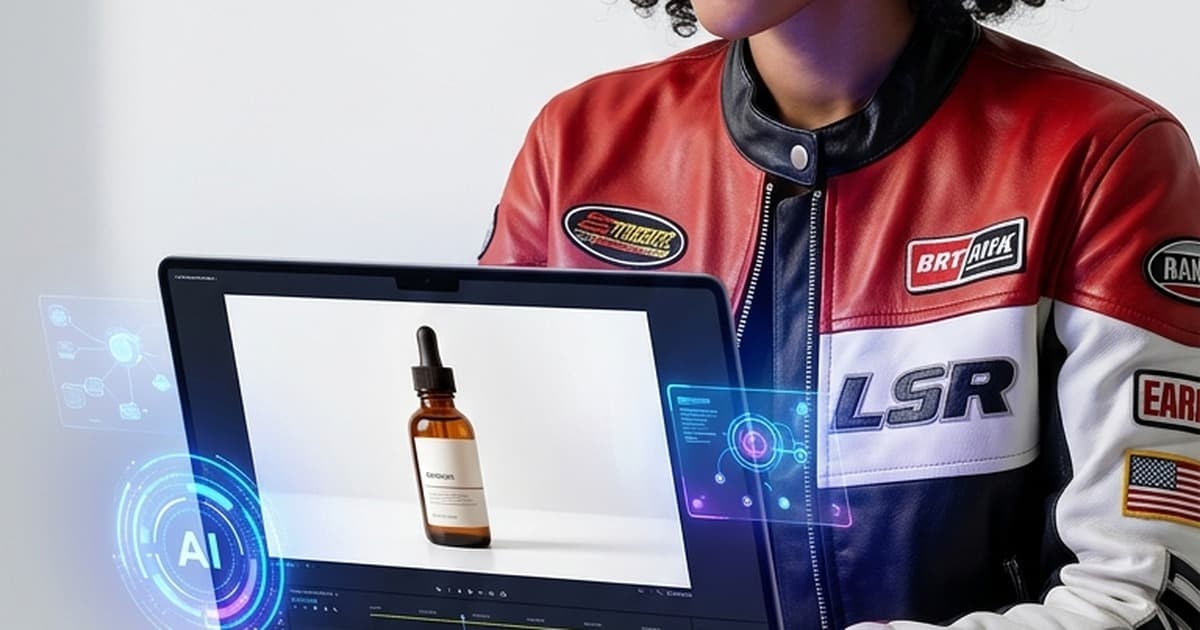
Product videos convert. That's not a hot take — it's been proven across every major ecommerce platform, category, and price point. Shoppers who watch a product video are up to 85% more likely to buy than those who only see static images. On Amazon, listings with video see 3–5× higher engagement. On TikTok Shop, video-first listings routinely outperform their image-only counterparts by double-digit percentage points.
You already know this. The problem isn't awareness — it's execution.
Because making product videos the traditional way is expensive, slow, and operationally brutal at any meaningful scale. And if you're running an ecommerce brand with hundreds or thousands of SKUs, "film everything" isn't a strategy. It's a fantasy.
That's exactly where an AI video studio for ecommerce changes the game. Instead of pointing a camera at your products, you feed in your existing product photos — and let AI turn them into polished, conversion-ready videos. No crew. No studio. No reshoot when the product changes.
This post breaks down why product video matters more than ever, why the traditional filming approach is broken, and how AI video generation is solving the problem at scale.
Why Product Video Is Non-Negotiable in 2026
Let's start with the "why" — because it's gotten more urgent, not less.
Shoppers Expect to See Products in Motion
Static images made sense when ecommerce was new. Seeing a product photo online was novel. That era is over. Today's shopper has been conditioned by Instagram Reels, TikTok, YouTube Shorts, and shoppable livestreams. They expect to see products move — to understand texture, scale, functionality, and fit in a way a flat image can't communicate.
When you don't have video, you're not just missing a nice-to-have. You're leaving a gap that your competitor with video is filling.
The Stats Are Decisive
- 64–85% of consumers are more likely to purchase a product after watching a video about it (Animoto)
- Product pages with video see up to 35% higher add-to-cart rates (Wyzowl)
- 96% of shoppers say they've watched a video to learn more about a product before buying (HubSpot)
- Amazon listings with video generate significantly higher click-through rates from search results
- TikTok Shop sellers report 2–3× higher conversion rates for video-enabled listings vs. image-only
These aren't marginal gains. Video is the single highest-leverage conversion lever most ecommerce brands aren't fully using — not because they don't believe in it, but because they can't produce it fast enough.
Platform Algorithms Reward Video
It's not just about conversion on the product page. Every major platform — Amazon, TikTok, Instagram, Pinterest — algorithmically favors video content. That means video doesn't just convert better; it reaches more people in the first place.
If two competing listings are equal on price, reviews, and description, the one with a video ad or video listing thumbnail is going to get more impressions. Full stop.
The Filming Problem: Why Traditional Production Doesn't Scale
If video were easy and cheap to produce, every brand would have it for every SKU. They don't. Here's why.
The Cost Reality
A single professional product video shoot — even a basic one — typically runs $500 to $5,000+ depending on complexity. That includes:
- Studio rental or location fees
- Photographer/videographer day rate
- Props, lighting equipment, and setup time
- Post-production: editing, color grading, music licensing
- Revisions: because it's never right on the first pass
If you have a catalog of 200 SKUs, you're looking at six figures just to get every product on video. And that's before you factor in seasonal updates, product variants, new colorways, or packaging refreshes.
The Time Problem
Even if budget wasn't a concern, production timelines are brutal. A typical product video shoot requires:
- Pre-production planning (brief, shot list, mood board): 2–5 days
- Shoot day setup and execution: full day per 10–20 products
- Post-production editing: 3–7 days per batch
- Review cycles and sign-off: another week
For a 100-SKU catalog, that's months of work — and by the time you're done, some of your early products may have already updated packaging or been discontinued.
The Operational Complexity
Physical shoots require coordination across teams, agencies, and schedules. You need samples on hand (fragile, expensive, sometimes impossible to source in quantity). You need models if it's a lifestyle product. You need locations if it's not a studio piece. You need someone to manage the entire pipeline.
For most ecommerce operators — especially mid-market brands running lean teams — this complexity is simply incompatible with how fast you need to move.
The Scale Ceiling
Here's the fundamental problem: traditional video production has a hard ceiling on scale. You can't film everything. You have to choose what gets video and what doesn't — which usually means only hero SKUs and bestsellers get the treatment.
The rest of your catalog sits there with static images while your competitors with better content tools eat your lunch.
How an AI Video Studio Solves This
An AI ecommerce video platform inverts the entire model. Instead of building a production pipeline around your products, you feed in what you already have — product photos — and AI generates the video.
Here's how it works in practice.
Step 1: Start With Your Product Photos
You already have these. Every ecommerce brand has product photography — it's table stakes for listing on any platform. The AI video workflow starts here rather than requiring you to go back to the studio.
Good AI video generation works from:
- White-background product shots (standard ecommerce format)
- Lifestyle photography (products in use or context)
- Multiple angles or a combination of both
- Even renders or mockups in some cases
The system uses these as the visual foundation, understanding the product's shape, color, material, and context from the images you provide.
Step 2: AI Animates and Generates Motion
This is where the magic happens. AI video models — including the generation of models from providers like Sora, Kling, Runway, and Pika — have gotten remarkably good at understanding spatial relationships, product shapes, and realistic motion. They don't just slap a zoom effect on your image (the old Ken Burns trick). They generate actual video motion: products rotating, liquids pouring, fabrics billowing, accessories being picked up and held.
The result looks filmed, not animated. To a viewer scrolling through TikTok or browsing an Amazon listing, it reads as professional video content.
Step 3: Add Platform-Optimized Formatting
Raw AI video is just the start. An AI video studio for ecommerce goes further:
- Aspect ratio adaptation: 9:16 for TikTok/Reels, 1:1 for Instagram feed, 16:9 for website product pages
- Text overlays and captions: Key selling points surfaced in the video itself (critical for silent autoplay on social)
- Brand consistency: Fonts, colors, and visual identity applied across every video
- Music and audio: Licensed background tracks appropriate to category and vibe
This is what differentiates a purpose-built AI video studio from just running a raw AI model. The output is ready to deploy, not just technically generated.
Step 4: Review and Export
The workflow closes with a review interface where you can see the generated video, request variations if needed, and export in the formats your channels require. For most SKUs, this review step takes minutes — not days.
Bulk Video Generation: The Catalog-Scale Game Changer
Here's where AI video genuinely transforms ecommerce operations, not just adds convenience: bulk generation across your entire catalog.
Why Catalog Coverage Matters
The conversion lift from product video isn't just about individual SKU performance. It's about coverage. When every product in a category has video, you build a consistent brand experience that signals quality and professionalism at every touchpoint.
Shoppers who browse multiple products in your store encounter video everywhere. That consistency builds trust. Trust builds conversion. And it compounds — a shopper who sees your video content across five products is far more likely to buy than one who saw video once and static images four times.
Traditional Production vs. AI Bulk Generation
| Traditional Production | AI Bulk Generation | |
|---|---|---|
| Time per SKU | 1–5 days | Minutes |
| Cost per SKU | $200–$2,000+ | Fraction of the cost |
| Minimum viable batch | 10–20 SKUs | 1 or 1,000 |
| Catalog coverage | Hero SKUs only | Full catalog possible |
| Update turnaround | Weeks | Hours |
| Team required | Production agency or in-house team | None |
At scale, this isn't a marginal efficiency gain — it's a structural advantage. Brands using AI bulk video generation can have video for every SKU, every variant, and every seasonal refresh. Brands relying on traditional production will always be behind on coverage.
Real-World Catalog Scenarios
Fashion brand with 300 SKUs and 4 colorways each: 1,200 product videos that would cost hundreds of thousands of dollars to produce traditionally. With AI, the entire catalog can be covered in days.
Home goods retailer launching a seasonal collection: 50 new SKUs dropping in 3 weeks. Traditional production would require pre-booking studios 2 months out. AI generation handles it in the week before launch.
Dropshipping operation with constantly rotating inventory: New products added weekly. Traditional video is impossible. AI makes consistent video content feasible for every new addition.
Marketplace seller competing on Amazon and TikTok Shop simultaneously: Needs 9:16 vertical for TikTok, 1:1 for Amazon A+ content, and a 16:9 header video for Shopify. Three format variants per product, at scale. The AI studio handles the resize and reformat automatically.
What to Look for in an AI Video Studio for Ecommerce
Not all AI video tools are built the same. If you're evaluating options, here's what actually matters for ecommerce use cases.
Ecommerce-Specific Motion Quality
Generic AI video models are trained on all kinds of content. Ecommerce requires something specific: videos where the product is the hero, motion is controlled and purposeful, and the output looks like professional product marketing content — not a sci-fi short film.
Look for platforms that have trained or fine-tuned specifically on ecommerce use cases, or that offer ecommerce-specific templates and motion profiles.
Catalog Integration
If you're running a Shopify store, WooCommerce site, or selling on Amazon, the friction of uploading individual product images one by one is a dealbreaker at scale. The right AI video studio connects to your product catalog — pulling images, titles, descriptions, and variant data — so you can generate video in bulk without manual data entry.
Multi-Platform Output
Your videos need to work across different surfaces with different requirements. The platform should handle aspect ratio formatting, resolution requirements, and file format specifications for each channel automatically.
Speed and Turnaround
At catalog scale, generation speed matters. You need a platform that can handle batches of hundreds of products without requiring you to wait days for results.
Review and Edit Workflow
AI-generated content needs human review — not line-by-line editing, but a quick pass to catch anything off. The best platforms make this fast: a thumbnail gallery of generated videos with one-click approval, regeneration requests, and batch export.
Getting Started: From Zero to Video-Ready Catalog
If you're starting from scratch, here's the practical path to getting your catalog video-enabled with an AI video studio.
Week 1: Audit your product photography Pull together what you have. Ideally, you want at least one clean product image per SKU — white background preferred, but lifestyle shots work too. Identify any SKUs with poor or missing photography; these will need basic photo updates before AI video can generate well from them.
Week 2: Generate and review a test batch Start with your top 20–30 SKUs. Generate videos, review the output, and get a feel for what the AI produces. This is also where you dial in any brand settings — fonts, colors, music preferences.
Week 3: Full catalog rollout Once you're satisfied with quality on the test batch, run your full catalog. Review, approve, and export.
Week 4: Deploy and measure Push your videos live on product pages, ad campaigns, and social channels. Benchmark conversion rates before and after. Expect to see lift within 2–4 weeks on most platforms.
Ongoing: Keep pace with your catalog Set up a workflow for new product launches — ideally, video generation happens as part of the standard product setup process, so every new SKU launches with video on day one.
Common Questions About AI Product Video
Will AI-generated videos look fake or cheap? Not with the right platform. Modern AI video models — the underlying generation technology has improved dramatically in 2024–2025 — produce photorealistic motion that reads as filmed content to most viewers. The key is using a platform with ecommerce-optimized generation, not a generic consumer AI tool.
What if my product photography isn't perfect? AI video works best with clean, well-lit product photos. It won't fix fundamentally bad photography, but it doesn't require studio-perfection either. Most standard ecommerce product photos are sufficient input.
Can I use AI video for my ads, not just product pages? Absolutely. AI ecommerce video is actually highly effective for performance marketing — especially short-form video ads on Meta and TikTok. The motion-based content tends to outperform static images significantly in ad auction environments, and the cost-per-video is low enough to test a wide range of creative variants.
Does this replace my existing creative team? No. AI video handles the production execution that's currently too expensive or slow to scale. Your creative team focuses on strategy, brand positioning, and the high-level direction — AI handles the output volume.
The Competitive Math
Here's the bottom line from a competitive positioning standpoint.
Your competitors are not standing still. Early adopters of AI ecommerce video are already building catalog-wide video coverage, running video-forward ad campaigns, and seeing the conversion lift compound over time. The gap between "has video everywhere" and "has video only on hero SKUs" is growing.
The cost and time barrier that used to make comprehensive video coverage impossible no longer exists. That means if you're not using AI video generation, you're choosing to be at a disadvantage — not being forced into one.
The brands that move early build a moat: more data on what video content converts, more optimized creative at scale, and more customers who've formed their impression of the brand through video content. That's hard to undo once it's established.
Ready to Create Product Videos Without Filming?
If you're running an ecommerce brand and you're still relying on static images while video is proven to convert better, the conversation starts here.
Tellos AI Video Studio is built specifically for ecommerce operators who need to generate product video at scale — without a camera, a crew, or a six-month production backlog.
Upload your product photos. Generate videos across your full catalog. Deploy to every channel you sell on. It's the AI video studio built for the way ecommerce actually works.
Start generating product videos with Tellos →
Want to go deeper on AI video for ecommerce? Read our guide on AI video ads for Shopify and Amazon and how video is reshaping product pages across every major platform.