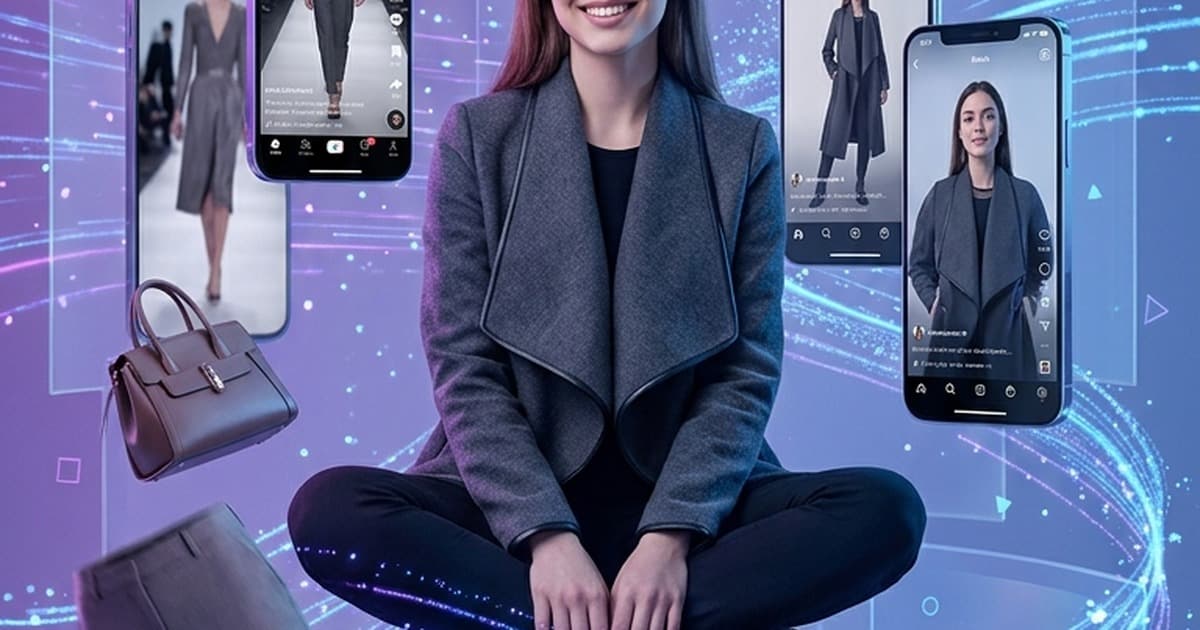
Short-form video is no longer a nice-to-have for fashion brands — it's the entire game. TikTok, Instagram Reels, and YouTube Shorts have become the dominant product discovery channels for consumers under 35, and the brands winning on these platforms are publishing video content at a pace that would have seemed impossible three years ago.
The problem? Shooting professional video content is slow, expensive, and doesn't scale. A single product video shoot costs thousands of dollars and produces maybe five or six usable clips. Brands that used to refresh their ad creatives monthly are now expected to refresh them weekly — sometimes daily — to stay relevant in algorithmically driven feeds.
AI video changes that equation completely. By converting existing product photos into motion content, fashion brands can generate dozens of scroll-stopping ad creatives in hours, not weeks — and do it without booking studios, hiring models, or managing post-production pipelines.
This guide breaks down exactly how to do it.
Why Short-Form Video Is Non-Negotiable for Fashion in 2026
Fashion was always visual. What changed is the format.
Static images used to dominate product discovery. A polished lookbook photo on Pinterest, a styled flat-lay on Instagram — that was the playbook for years. It worked because that's where attention lived. But attention has moved, and it's moved decisively into short-form video.
The numbers tell the story:
- TikTok now has over 1.5 billion monthly active users, with fashion being one of the top purchase-driving categories
- Instagram Reels generates 22% more engagement than standard posts — and that gap is widening
- 73% of consumers say they prefer to watch a short video to learn about a product versus reading text
- TikTok Shop is growing faster than any other social commerce platform, with fashion as its single biggest category
The implication for fashion brands is stark: if you're not creating short-form video content consistently, you're invisible to a large and growing segment of your potential customers. Discovery happens in feeds, and feeds are video.
What makes this particularly urgent in 2026 is how algorithm saturation has shifted content requirements. The platforms reward freshness. A Reel or TikTok that worked beautifully last month will have diminishing returns this month — not because it's bad content, but because the algorithm deprioritizes content it's already shown widely. Brands that stay visible are brands that keep feeding the algorithm new creative.
The Content Volume Problem: Why Traditional Production Fails Fashion Brands
Here's the math that breaks traditional video production for fashion brands.
To run effective paid social campaigns across TikTok and Meta simultaneously, industry benchmarks suggest you need 10–30 new ad creatives per week. That accounts for:
- Multiple product SKUs
- Different hooks and opening shots for A/B testing
- Platform-native aspect ratios (9:16 for TikTok and Reels, 1:1 for feed, 16:9 for YouTube)
- Seasonal and trend-driven variations (fashion moves fast — what's trending on TikTok this week is irrelevant next week)
- Different audience segments and messaging angles
Traditional video production — talent booking, studio time, shoot days, editing, color grading — produces roughly 5–10 polished videos per shoot. A shoot costs $3,000–$15,000 depending on scale. At the volume modern paid social demands, that means spending $30,000–$150,000 per month on content production alone, just to stay competitive.
That's not viable for most fashion brands, especially DTC operators running lean.
The result: Most fashion brands are either underspending on content (and losing visibility) or overspending on shoots (and burning margin). Neither is sustainable.
The other failure mode is reusing the same creative too long. When your ad frequency climbs but your creative stays the same, you get creative fatigue — the dreaded combination of rising CPMs and falling ROAS. Audiences tune out, platforms penalize, and performance tanks. The fix is more fresh creative, but the production bottleneck makes that impossible to execute at traditional cost.
This is the gap AI video was built for.
How AI Video Turns Product Photos Into Scroll-Stopping Fashion Ads
AI video generation has matured dramatically. The models powering these tools — Kling, Sora, Runway, Pika, and others — can now create convincing motion from a single still image. For fashion brands, that means your existing product photography becomes an asset library you can draw from continuously.
Here's how the workflow actually looks:
Step 1: Start With Your Product Photos
You don't need to shoot anything new. Upload the product images you already have — flat lays, on-model shots, lookbook imagery. The better the source image (clean background, good lighting, sharp detail), the better the output. But even standard white-background product shots can yield compelling motion content.
Step 2: Generate the Motion Clip
AI video models apply realistic motion to your still image. A leather jacket floats slightly in a cinematic breeze. A dress drapes and moves as if on a walking model. A handbag rotates slowly with a gloss-catching light sweep. The motion can be subtle and elegant or dynamic and energetic — the prompt controls the style.
For fashion specifically, prompts that work well include:
- Cinematic slow zoom with fabric drape motion
- Walking model movement inferred from a stationary shot
- Dynamic pan across a product flat lay with lighting effects
- Runway-style reveal from a close-up to full look
Step 3: Add Text, Hooks, and Branding
Raw AI video clips need context to work as ads. Overlay your hook text in the first two seconds (more on hooks below), add brand typography, and apply a CTA in the final frame. Keep the text minimal — let the visual do the work. Most platforms' creative tools support text overlay, or you can use lightweight tools like CapCut, Adobe Express, or Canva for the finishing layer.
Step 4: Export for Each Platform
Export variants for:
- TikTok/Reels/Shorts: 9:16 vertical, 15–30 seconds, high energy
- Instagram Feed/Facebook: 1:1 square, 15–30 seconds
- YouTube Shorts: 9:16, up to 60 seconds works here
- Pinterest video: 2:3 or 9:16
With AI video, creating platform variants takes minutes, not hours. You're not re-shooting; you're re-exporting and cropping.
The total pipeline — from product image to published ad — can run in under an hour for a full batch of creatives. That's what makes the 10–30 creatives/week target actually achievable.
Check out our deeper dive on turning product photos into video content for more on the photo-to-video workflow specifically.
Formats and Aspect Ratios: What Actually Performs
Not all video formats are equal, and fashion content has specific dynamics that differ from other ecommerce categories.
9:16 Vertical (TikTok, Reels, Shorts) — Your Primary Format
This is where fashion discovery happens. The full-screen immersive format is ideal for showing clothing in motion — the viewer sees the full look without any distraction. For fashion brands, 9:16 should be 80% of your creative output.
What works in 9:16 for fashion:
- Full-body shots that show the complete outfit
- Close-up texture shots that lead into a full product reveal
- Before/after styling transitions
- Fast-cut montages of multiple SKUs in one clip
1:1 Square (Feed and Carousel) — Your Supporting Format
Square is still a solid performer in feed placements on Meta. It doesn't dominate the screen like vertical, but it's less intrusive and works well for remarketing campaigns where you're re-engaging people who've already seen your brand.
For fashion, 1:1 tends to work better for product-focused, conversion-stage ads where you're showing a single piece clearly with a direct CTA.
4:5 Vertical (Instagram Feed) — The Underused Format
4:5 is taller than square but not full-screen like 9:16. It takes up more real estate in the feed than square and still looks polished on desktop. Many fashion brands skip this format — which means less competition for attention in that placement. Worth testing.
Optimal Duration
- TikTok paid ads: 9–15 seconds performs strongest for cold audiences; 30–60 seconds works for remarketing
- Instagram Reels ads: 15–30 seconds sweet spot
- YouTube Shorts: 30–60 seconds allows more storytelling room; strong for mid-funnel
Hooks That Stop the Scroll for Fashion Ads
The first 1.5 seconds of a fashion video ad decide whether anyone watches the rest. The algorithm measures it. The audience acts on it. Getting the hook right is the highest-leverage creative decision you'll make.
Hook principles for fashion specifically:
-
Lead with the product, not the brand. Nobody stops scrolling for a logo. They stop for something that catches their eye. Open on the garment, the texture, the color — then earn the brand moment later.
-
Motion in the first frame. Static opening frames lose to motion. If the first frame is a still image, use a Ken Burns zoom or a slow push to create the illusion of motion from the start.
-
Pattern interrupt. Fashion feeds are saturated with similar-looking content. Hooks that break expectations — unusual angles, extreme close-ups of fabric detail, unexpected color palettes — outperform "standard" polished fashion creative.
-
Text hooks that create tension. Overlay text in the first two seconds that creates curiosity or urgency:
- "You need this in your wardrobe before summer."
- "The piece everyone is asking about."
- "Why does this always sell out in 48 hours?"
- "The jacket that breaks dress codes."
-
Sound-on vs. sound-off. Design for both. Roughly 40% of TikTok videos are watched without sound. Your visual content needs to communicate independently. But a trending audio track as a soundtrack dramatically improves organic reach if you're posting natively — not just running paid.
| Hook Type | Best For | Avg. Watch-Through |
|---|---|---|
| Extreme close-up texture reveal | Luxury / premium fashion | High |
| Before/after styling transition | Styling-focused brands | High |
| Model movement open | On-model product shots | Medium-High |
| Pattern interrupt (unusual angle) | Cold audience acquisition | Medium |
| Text + product motion | Remarketing / warm audiences | Medium |
Building a Fashion Content Calendar at Scale
Volume without strategy is noise. Here's a framework for structuring your AI-powered fashion content machine:
Weekly Content Mix (Target: 15–20 Creatives)
New arrivals (30%): Each new drop gets 4–6 video variants immediately — different hooks, different durations, different formats. AI video makes it possible to generate these the day the product lands, not three weeks later after a shoot.
Evergreen hero products (25%): Your best-selling styles should have constantly refreshing creative. The same hero jacket gets new hooks, new motion styles, new seasonal context. AI lets you iterate on these without re-shooting.
Trend-responsive content (20%): When a style goes viral on TikTok, you need to move fast. With AI video from existing photos, you can have a trend-responsive ad live within a day of spotting the trend — before the moment passes.
Remarketing variants (15%): Warm audiences need different messaging. Product-specific, benefit-led, urgency-driven. Short, direct, conversion-focused.
Seasonal and editorial (10%): Campaign-style content around key fashion calendar moments — sale periods, seasonal transitions, style guide themes. These can be slightly longer and more cinematic in treatment.
The Creative Iteration Flywheel
The real power of AI video for fashion isn't just volume — it's iteration speed.
Traditional production: ship a creative, run it for 30 days, analyze results, brief agency, shoot new creative, wait 3 weeks, repeat.
AI video production: ship 10 variants simultaneously, see which hooks land in 72 hours, iterate on the winners, ship 10 more next week.
This flywheel compounds. By week 6, you have real performance data on dozens of creative formats and hooks. You know exactly which opening shot, which text overlay, which motion style drives the best ROAS for each audience segment. That's a genuine competitive advantage — and it's only possible at the volume AI makes achievable.
For a broader look at how AI is reshaping content creation workflows for fashion, see our 2026 playbook for fashion brands.
Platform-Specific Tips for TikTok, Reels, and Shorts
TikTok
TikTok's algorithm is uniquely aggressive about rewarding early engagement velocity. A video that gets strong watch-through and interaction in the first hour gets pushed hard. The implication: your hooks need to be native to the platform. Over-polished, brand-forward fashion creative tends to underperform against raw-feeling, trend-aware content.
Best practices for TikTok fashion ads:
- Use trending audio tracks when possible (even in paid, it improves feel)
- Text overlays should feel native — not graphic design heavy, more like TikTok's own captions
- Show product in context (styled, in motion, worn) rather than on white background
- Participate in trends — a trending sound or format mechanic + your product + AI motion = efficient trend content
Instagram Reels
Reels sits between TikTok (raw/native) and feed (polished/branded). Fashion on Reels tends to reward slightly higher production quality than TikTok while still needing that motion-first, hook-driven structure.
Best practices for Reels fashion ads:
- 4:5 and 9:16 both work — test both placements
- Aesthetic cohesion with your brand profile matters more here than on TikTok
- Outfit reveal formats consistently perform (before: structured outfit → after: final styled look)
- Product tag integration is stronger on Instagram — make it easy to buy directly from the Reel
YouTube Shorts
Shorts is the underrated platform for fashion brands in 2026. The audience skews slightly older than TikTok, competition is lower (fewer fashion brands are leaning in here), and the content has a longer shelf life — a Shorts video that performs well keeps generating views for months.
Best practices for Shorts fashion ads:
- Slightly longer format works (30–60 seconds) — you can tell more of a story
- How-to styling content (3 ways to wear X) outperforms pure product clips
- High-quality AI video tends to look premium on Shorts — lean into cinematic motion styles
Measuring What Matters: Fashion Ad Metrics
More content only wins if you're measuring the right signals and iterating accordingly.
Metrics to track by funnel stage:
For cold audience acquisition (TikTok/Reels discovery):
- Hook rate: percentage of viewers who watch past the first 3 seconds (benchmark: >30%)
- Watch-through rate: percentage completing 50%+ of the video (benchmark: >20%)
- CPM and CTR: efficiency of the creative at driving traffic
For mid-funnel (remarketing):
- Click-through rate: are warm audiences actually clicking through?
- Add-to-cart rate from video: tracked via pixel
- Cost per click: should be significantly lower than cold audience
For conversion:
- ROAS from video placements: track separately from static
- Cost per purchase: by creative variant
The golden metric for creative iteration is hook rate combined with purchase intent. A hook that drives high watch-through but no purchases is a brand awareness play, not a performance one. You want hooks that attract the right viewer, not just any viewer.
From Product Photo Library to Paid Ad Machine
Let's make this concrete. Here's what the AI-powered fashion ad production workflow looks like in practice for a mid-size DTC fashion brand:
Week 1 (setup):
- Upload full product photo library (flat lays, on-model, lifestyle imagery) to AI video platform
- Generate initial batch of 20 motion clips across hero SKUs
- Add text hooks and CTAs; export 9:16 and 1:1 variants
- Launch 10 paid creatives split across TikTok and Meta as tests
Week 2 (iterate):
- Review 72-hour performance data
- Identify top 3 performing hooks and motion styles
- Generate 15 new creatives using winning formulas applied to different products
- Retire bottom performers; refresh mid-performers with new hooks
Week 3+ (compound):
- Establish weekly cadence of 15–20 new creatives
- Layer in trend-responsive content when TikTok trends align with your product categories
- Begin building season/editorial creative for upcoming sale periods
Within 6–8 weeks, you're running a continuous creative production machine that would have required a full content team to operate manually — but is now driven primarily by AI video generation from your existing photo assets.
This is exactly the workflow covered in our guide to AI product photography for fashion brands — the upstream content creation that feeds into the video production pipeline.
The Real Competitive Advantage: Creative Volume as a Moat
Here's the thing about creative volume that doesn't get talked about enough: it compounds.
Brands that ship 15 creatives per week accumulate performance data 15x faster than brands shipping one creative per week. That data tells you which products people respond to, which hooks resonate with which audiences, which motion styles convert at each stage of the funnel. Over time, this builds a proprietary creative intelligence that competitors can't easily replicate.
It's not just about keeping up. It's about pulling ahead.
Fashion is a category where trends shift fast, attention is fragmented, and the difference between discovery and invisibility is whether you're publishing the right content at the right moment. AI video makes it possible to always be in the conversation — across platforms, across products, across formats — at a cost that doesn't hollow out your margins.
The brands that adopted social commerce early built advantages that persisted. The brands adopting AI video production at scale now are building the same kind of durable edge.
Ready to Build Your Fashion Video Ad Engine?
Tellos AI Video Studio is built specifically for ecommerce brands that need to produce short-form video content at scale. Upload your product photos, describe the motion and style you want, and get platform-ready video ads in minutes — no shoot, no studio, no production timeline.
Here's what you get with Tellos:
- Product-photo-to-video generation — turn any existing image into a motion ad creative
- Platform-native export — 9:16, 1:1, 4:5 variants ready for TikTok, Reels, and Shorts
- Fashion-specific motion styles — fabric drape, cinematic reveal, model movement, and more
- Batch creation — generate a week's worth of creatives in an afternoon
- No technical skills required — if you can upload a photo, you can create a video ad
Fashion brands using Tellos are shipping 20–30 video creatives per week from their existing product photo libraries. They're testing more hooks, reaching more audiences, and building faster creative flywheels — without growing their production budgets.
→ Try Tellos AI Video Studio and start producing fashion video ads at the pace modern social commerce demands.