Amazon's image requirements for fashion listings are not suggestions. They are a compliance checklist, and failing it gets your listing suppressed. No images, no sale. Simple as that.
The problem for most fashion sellers, especially those scaling through Fulfillment by Amazon, is that meeting those requirements the traditional way is expensive, slow, and hard to repeat across a large catalog. You need a pure white background main image shot on a real human model, multiple alternate angles, lifestyle shots for secondary slots, and detail images that show fabric and construction. That's a full studio production for every single SKU.
AI product photography changes the math entirely. You start with one flat-lay. You end up with a full Amazon-compliant image set. Here's how it works and why FBA fashion sellers are switching fast.
What Amazon Actually Requires for Fashion Listings
Understanding the requirements is step one. Amazon's image guidelines for fashion categories are stricter than most other categories, and they differ depending on whether you're uploading the main image or secondary images.
Main Image Rules (the ones that get listings suppressed)
The main image is what shoppers see in search results. Amazon enforces these hard:
- Pure white background - RGB 255, 255, 255. Not off-white, not light grey, not 254, 254, 254. Pure white.
- Human model required - For adult and children's apparel, the main image must show the garment worn on a live human model. Mannequins, hangers, and flat-lays are not permitted for the main image slot in most apparel categories.
- Product fills 85% of frame - The garment must occupy at least 85% of the image area. Excessive white space around the product is a suppression trigger.
- Minimum 1,000px on longest side - This is the hard floor. But Amazon strongly recommends 1,600px or higher to enable their zoom feature, which research shows significantly increases conversion.
- No watermarks, text, or graphics - The main image must be clean. No brand logo overlays, no promotional text, no borders.
- No accessories not included in listing - If you're selling a shirt, don't show it with a belt or bag you're not selling. Amazon considers this misleading.
Secondary Image Requirements (slots 2 through 9)
Amazon allows up to nine images per listing (one main plus eight alternates). The secondary slots are more flexible, and they're where your visual storytelling happens:
- White background still recommended but not mandatory - Secondary images can use real environments, lifestyle settings, and colored backgrounds.
- Multiple angles strongly recommended - Front, back, and side views are expected by shoppers and improve conversion.
- Lifestyle images - Amazon explicitly supports lifestyle secondary images showing the product in use. These are proven conversion drivers.
- Detail shots - Close-ups of fabric texture, stitching, hardware, and construction details. Particularly important for higher-price-point items.
- Size charts and fit guides - Infographic-style images showing measurements and sizing are allowed in secondary slots and significantly reduce returns.
- Same resolution minimums apply - All images should be 1,000px minimum, 1,600px+ recommended.
The Fashion-Specific Compliance Gap
Most non-fashion sellers can get away with product-on-white photography. Fashion sellers can't. The human model requirement for main images means you can't just photograph your garments on a table and upload them. You need real on-model photography for every product.
For a brand with 50 SKUs, that's 50 separate on-model main images. For a brand with 500 SKUs, the scale becomes nearly impossible to manage through traditional shoots.
This is the exact problem AI product photography solves.
How AI Product Photography Generates a Full Amazon-Compliant Image Set
The core workflow is straightforward: you provide one source image of your product (a flat-lay, a mannequin shot, a ghost mannequin image), and the AI generates the complete set of images Amazon requires.
Step 1: The Main Image - On-Model, Pure White Background
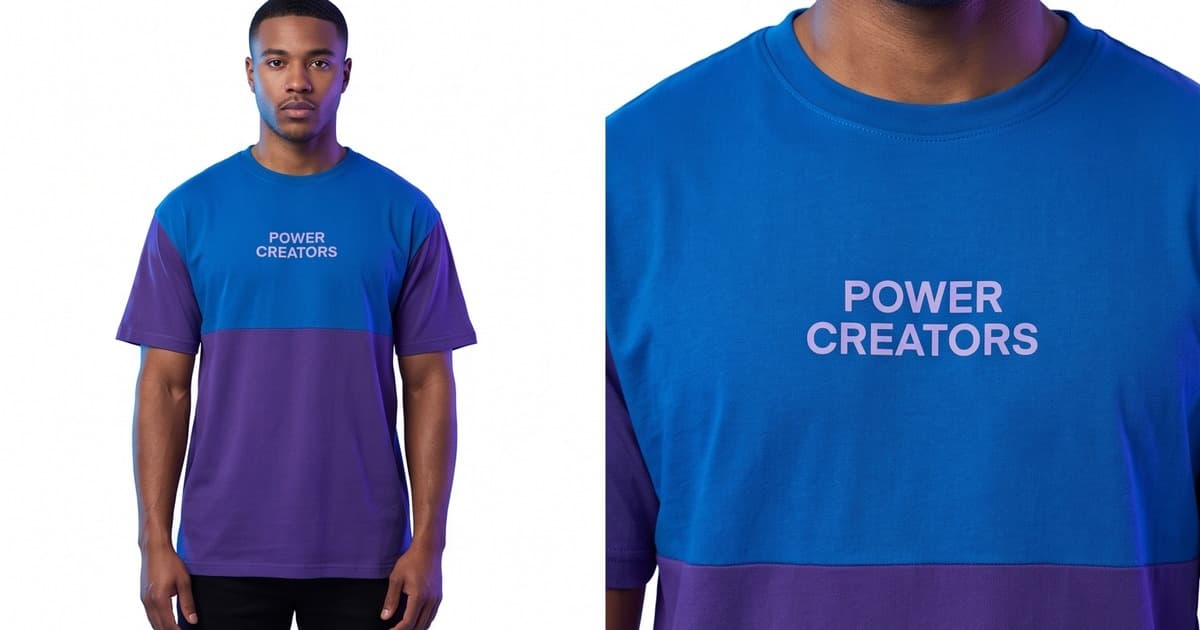
AI fashion models are trained on millions of garment images. When you upload a flat-lay of your product, the AI understands the garment: its fabric type, drape, color, pattern, and construction. It then renders that garment on a photorealistic AI model, positioned against a pure white background.
The output meets every Amazon main image specification:
- Pure white background - Generated programmatically, not photographed, so it's always exactly RGB 255, 255, 255
- Human model - A photorealistic AI model wearing the actual garment, not a mannequin
- Product fill - The AI frames the model and garment to meet the 85% fill requirement
- Resolution - Output at 2,000px+ by default, well above Amazon's requirements and with zoom capability enabled
The key technical requirement here is garment accuracy. The AI must preserve every visual detail from your source image. Fabric texture, stitching, color, print placement, fit lines - none of it changes. The model wears exactly what you're selling, rendered with photorealistic accuracy.
Step 2: Alternate Angle Images
From the same source image, the AI generates multiple orientation variants:
- Back view - The same garment, same model, rotated to show the rear construction
- Side profile - Particularly important for structured pieces like jackets and dresses
- Three-quarter view - A popular secondary angle that shows both front construction and depth
- Detail crop - The AI can generate close-up renders focusing on specific construction details like collar stitching, pocket design, or hem finishing
Amazon's algorithm favors listings with complete image sets. Sellers who populate all nine image slots outperform those who upload only the main image. AI makes filling those slots economically viable for every product in your catalog.
Step 3: Lifestyle Images for Secondary Slots
Secondary image slots support lifestyle photography - and lifestyle images are consistently among the highest-converting image types on Amazon.
AI lifestyle generation works differently from main image generation. Instead of a white studio background, the AI places the garment-wearing model into a contextually relevant environment:
- Outdoor settings (parks, streets, coastlines) for casual wear
- Office or urban environments for workwear and blazers
- Social settings (restaurants, events) for occasion wear
- Active environments (gyms, trails) for athletic wear and athleisure
These lifestyle images tell the shopper where they'll wear this product and how it will look in a real context. That context drives purchase confidence, and purchase confidence drives conversion.
Step 4: Detail and Infographic Images
The final components of the Amazon image set are detail shots and size/fit infographics. AI handles both:
- Fabric detail renders - Close-up, photorealistic renders of the fabric texture at 2-3x normal zoom
- Construction details - Collar treatments, button quality, seam finishing, zipper hardware
- Flat-lay infographic base - A clean flat-lay on white (ironically, the format that can't be the main image is ideal for the infographic secondary slot), over which size charts and feature callouts can be overlaid
The full image set - main on-model image, three alternate angles, two lifestyle images, two detail shots, and one infographic - is generated from a single source image. No studio. No scheduling. No photographer.
Why FBA Sellers Specifically Need to Scale Visual Content Fast
Fulfillment by Amazon creates a specific set of pressures that make AI product photography particularly valuable. Understanding those pressures explains why adoption is accelerating in this seller segment.
Inventory Commitment Forces Speed
FBA sellers ship inventory into Amazon's fulfillment centers before they start selling. The moment your inventory is in a warehouse, your holding costs begin. Listing creation speed - including image production - directly affects how quickly you start generating revenue from your committed inventory.
Traditional photography can take three to six weeks from brief to delivered images. AI product photography turnaround is measured in minutes to hours. Faster images mean faster listings, faster indexing, and faster sales against your carrying costs.
Catalog Expansion Economics
FBA sellers who scale typically do so by expanding their product catalog. Adding new SKUs is the engine of FBA growth. But each new SKU requires a full image set, and traditional photography cost scales linearly with catalog size.
At $300-600 per final image for traditional fashion photography, a 50-image Amazon set (5 images across 10 SKUs) costs $15,000-30,000. The same set via AI product photography costs a small fraction of that, making catalog expansion dramatically more accessible.
Seasonal Velocity
Amazon fashion sales are intensely seasonal. Q4 holiday, summer, back-to-school, spring drops - each seasonal transition requires new listings and updated photography. Brands that can refresh their visual content fast own the seasonal search real estate. Brands waiting on studio schedules miss the window.
AI production timelines compress what was a multi-week operation into same-day or next-day execution. Seasonal agility becomes a competitive advantage instead of a logistical headache.
A/B Testing Visual Content
A capability most FBA sellers never explore with traditional photography is systematic visual A/B testing. Replacing the main image on a listing is straightforward in Seller Central, but generating the alternatives to test with requires additional photo shoots.
With AI product photography, you can generate five variations of a main image - different model types, poses, crop ratios - and test them systematically. The winning variant lifts your listing's click-through rate and conversion rate. At scale, that optimization compounds across every product in your catalog.
The Compliance Advantage: Why AI Images Pass Amazon's Algorithm
One of the practical concerns sellers raise about AI product photography is whether Amazon's systems will flag AI-generated images or treat them differently. The short answer: Amazon's image compliance checks assess visual characteristics, not generation method.
The algorithm looks for:
- Background purity (white background check)
- Product fill percentage
- Presence of text overlays
- Image resolution
- Aspect ratio compliance
A well-generated AI product image meets every one of these criteria more consistently than traditional photography, which often requires color-correction and background cleaning in post-production to achieve true pure white.
AI images are generated to spec, not adjusted to spec after the fact. The background is exactly white because it's set in the generation parameters. The resolution is at target because that's the output setting. There's no margin for the subtle off-white that gets listings suppressed.
Professional sellers have reported higher first-pass image approval rates with AI-generated content compared to traditional photography, precisely because the compliance parameters are built into the generation workflow.
From Flat-Lay to Full Amazon Image Set: A Realistic Workflow
Here's what the practical workflow looks like for an FBA fashion seller using AI product photography:
Day 0 - Source Image Capture
You photograph your garments as flat-lays. This is cheap, fast, and requires nothing more than good lighting and a clean surface. Alternatively, ghost mannequin shots (the "invisible mannequin" technique that shows garment shape without a visible model) work equally well as source material.
One image per SKU. That's your entire photography input.
Day 0 or Day 1 - AI Generation
You upload your flat-lays to the AI photo generation system. For each product, you specify:
- Model type (the system may auto-select based on garment type)
- Pose set (frontal, back, three-quarter, lifestyle)
- Environment for lifestyle shots
- Output format requirements
The AI generates your full image set. Main image on white with human model. Alternates at multiple angles. Lifestyle variants. Detail crops. Typical processing time is minutes to an hour per SKU, depending on the complexity and number of output variants requested.
Day 1 - Quality Review and Upload
You review the generated images against Amazon's requirements. A modern AI photo system should output images that require minimal or no post-processing. You upload directly to Seller Central.
The entire cycle - from flat-lay photo to live Amazon listing with a complete compliant image set - completes in one to two days, versus three to six weeks for traditional studio photography.
What Tellos AI Photo Studio Does for Amazon Fashion Sellers
Tellos AI Photo Studio is built specifically for ecommerce operators who need to generate compliant, high-converting product imagery at catalog scale. It's not a generic AI image tool that happens to work for products - it's engineered for the specific requirements of fashion ecommerce platforms including Amazon.
What the platform does:
- Transforms flat-lay and ghost mannequin source images into on-model photography meeting Amazon's main image human model requirement
- Generates pure white background main images that pass Amazon's background compliance check automatically
- Produces full nine-image sets from a single source, including alternates, lifestyle, and detail images
- Maintains complete garment accuracy across all outputs - fabric, color, construction, and pattern fidelity preserved
- Outputs at Amazon-required resolutions with zoom capability enabled
- Scales across entire catalogs without linear cost increases
The platform handles the compliance complexity so you don't have to think about it. Every output is calibrated to Amazon's fashion image specifications. You get listings that go live, not listings that get suppressed.
If you're an FBA fashion seller dealing with image production bottlenecks, catalog expansion economics that don't add up, or seasonal refresh timelines that don't match your business velocity, AI product photography is the operational shift that changes those constraints.
You can see Tellos in action and learn more about what it does for fashion ecommerce brands at the link below.
Internal Resources
If you're thinking through broader AI photography and content strategy for fashion ecommerce, these posts are worth reading alongside this one:
- AI Photo Studio: From Flat-Lay to On-Model - A detailed look at the technology that powers flat-lay to on-model conversion, including how garment accuracy is preserved across AI rendering
- AI Fashion Photoshoot: Studio-Quality Images Without a Shoot - Why brands are replacing traditional photo shoots with AI, including a cost comparison that makes the economics clear
- Ghost Mannequin Photography vs. AI for Fashion Brands - A direct comparison of the ghost mannequin technique (still the most common Amazon-adjacent photography format) versus AI generation
- Fashion Photography Cost in 2026: Traditional vs. AI - The full cost breakdown of traditional fashion photography versus AI-generated content across catalog sizes
- AI Generated Clothing Photos: Accuracy Guide - How AI product photography preserves garment details, and what the current limitations are
Ready to Generate Your Amazon Image Set?
Amazon's requirements aren't going to get simpler. The human model requirement for fashion main images, the pure white background specification, the minimum resolution thresholds - these standards exist to protect the shopper experience on the platform, and Amazon enforces them with increasing automation.
The brands winning on Amazon fashion right now are the ones who've solved the content production equation. They're generating compliant image sets fast, testing visual variants systematically, and refreshing their listings in time for every seasonal window.
AI product photography is how you do that without a studio, without a photography budget, and without a three-week production cycle.
See how Tellos AI Photo Studio generates Amazon-compliant fashion images →