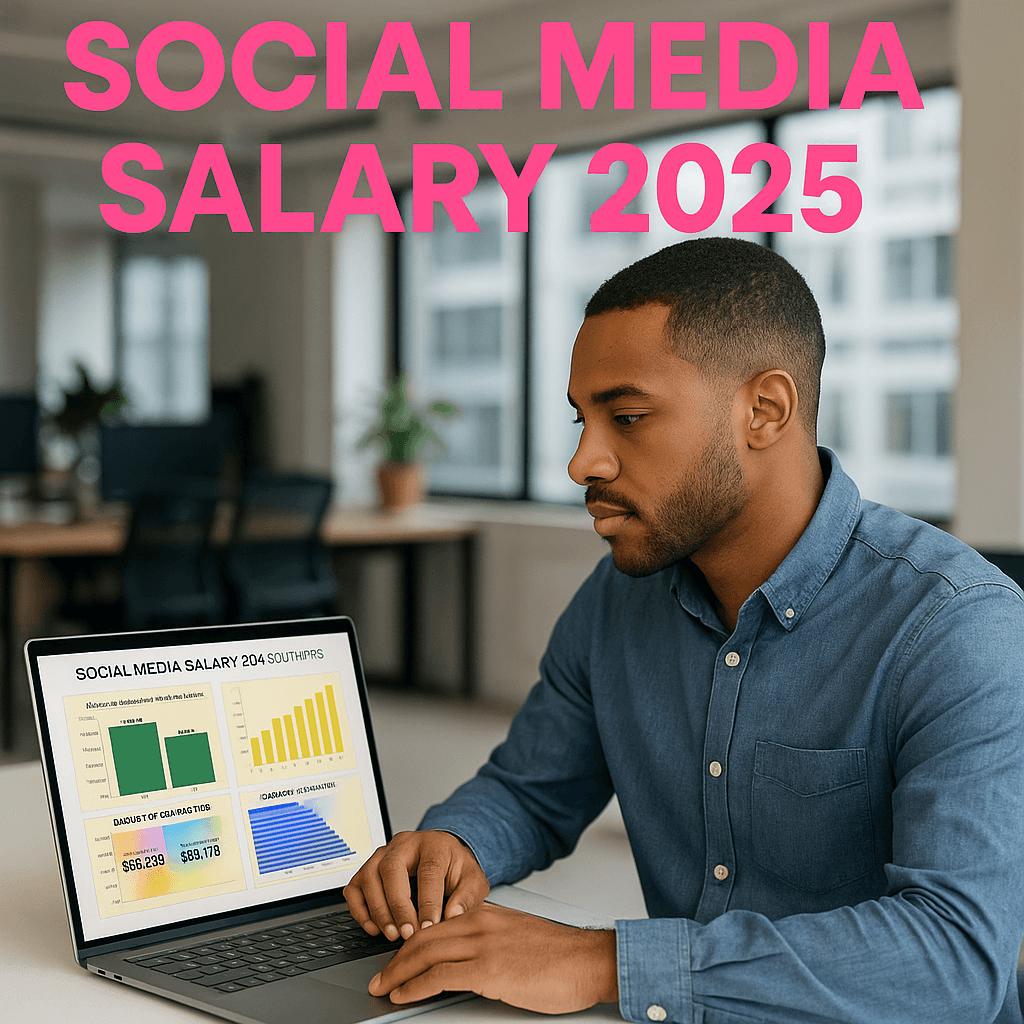
Link in Bio's 2025 Social Media Compensation Survey paints a revealing picture of what it really pays to work in the digital trenches — from the entry-level manager to the director driving brand strategy.
With over 2,500 respondents across 390 cities and 40 countries, this is one of the most detailed snapshots of compensation in the industry. And while the overall outlook is positive, the data also exposes some stark contrasts — especially across gender, company size, and sector.
Here's what every marketer, creator, and brand leader should know.
1. Experience Still Rules — Especially After 10 Years
Entry-level roles (under two years of experience) saw salaries rise just 3.3% year-over-year, from $61,660 to $63,718 — roughly in line with inflation. In other words, early-career professionals are earning slightly more on paper but not seeing much difference in real-world buying power.
But the big winners? Those with 10+ years of experience, especially veterans with 12 or more years in the industry. They reported a 12% increase in earnings year-over-year — a sign that companies are finally recognizing senior social media talent as strategic leaders, not just content schedulers.
Even brands like Duolingo made headlines by posting for a Director of Social Media role with a salary band up to $342,000 — proof that top-tier social leadership is now boardroom-level work.
2. Title Matters — and "Senior" Pays Off
While titles in social are notoriously fluid, the 2025 survey shows some clear pay patterns:
- Social Media Manager: Average salary $91,508, median $85,000.
- Senior Social Media Manager: Often earning $5,000–10,000 more than general managers.
- Social Media Director: The biggest leap of all, with salaries up 14% YoY, averaging $147,086.
Interestingly, the top 1% of general Social Media Managers reported $229,000+ annual salaries, while top Senior Managers earned $256,000+ — showing that high-impact content strategy still commands premium pay.
As more brands pivot toward video-first storytelling and creator partnerships, experienced managers who understand both creative and analytics are becoming indispensable.
For context on why this shift matters to Shopify brands, see why shoppable videos are the future of online shopping.
3. Freelancers vs. In-House: The Pay Gap Is Shrinking
While 70% of respondents work in-house, pay differences between employment types are surprisingly narrow:
- Freelancers/Consultants: $85,000 median
- Ad Agency Roles: $90,000 median
- In-House Roles: $90,000 median
The real difference comes in benefits and stability — full-time roles offer perks like healthcare and paid leave, which freelancers rarely receive.
Still, with new AI tools enabling social pros to scale creative output faster, many are turning to hybrid models — contracting for multiple brands while building their own niche authority.
This shift mirrors how brands are adopting automation for creative output — using platforms like Tellos AI to reduce manual workload while maintaining authenticity.
You can explore how that works in Tellos Shoppable Videos.
4. Industry: Tech Dominates, but Beauty and Health Are Rising
Across all sectors, salaries rose in 2025 — but not evenly.
- Technology: $125,000 median (highest overall)
- Health & Pharma: $108,000
- Beauty: $105,000
- Finance: $102,483
- Fashion: $100,000
- Small Business: $66,000 (lowest median)
Interestingly, sectors like Beauty and Health saw $10,000+ increases YoY — proving that social media's role in lifestyle-driven eCommerce is stronger than ever.
It's a reminder that industries investing in authentic content and creator collaborations — not just ads — are seeing both cultural and financial payoff.
For more data on how Gen Z and creators are reshaping eCommerce, check out the $480B creator economy shift.
5. Company Size and B2B vs. B2C
The larger the company, the higher the paycheck.
- 1,000+ employees: $107,000 median
- 500–999 employees: $96,000
- Self-employed: $85,000
Meanwhile, B2B marketers are still earning roughly 10% more than their B2C peers ($96,173 vs. $87,123). That premium likely reflects longer sales cycles, more complex content strategies, and performance accountability at the enterprise level.
But it's B2C where most of the creative innovation happens — the kind of storytelling that later fuels trends across TikTok and Instagram.
To learn how brands can make that creativity convert, read vibe marketing statistics 2025.
6. The Persistent Gender Pay Gap
Despite women making up the majority of the social media workforce, men are still earning nearly 25% more on average — $123,358 vs. $100,478.
Even more concerning, men are twice as likely to hold director-level roles (12% vs. 6%). Nonbinary, trans, and genderqueer respondents reported even lower averages, though sample sizes were smaller.
It's a sharp reminder that while creative industries pride themselves on inclusivity, equity still lags in compensation and leadership.
Salary transparency like this report is one of the first steps toward change — encouraging fair pay, accountability, and progress across marketing roles.
7. Takeaway: The Industry Is Growing Up
2025 marks a turning point. For the first time, there's year-over-year data showing measurable salary growth — especially for experienced professionals.
The message is clear: social media is no longer a side hustle; it's a strategic pillar of business.
And as brands compete for attention in an algorithm-driven, AI-influenced landscape, those who understand community, content, and conversion will continue to command higher value.
That's why video-first, shoppable storytelling — the kind Tellos enables — has become central to how brands prove ROI and brand equity online.
Explore the future of social commerce with Tellos.
FAQs
-
What's the average social media manager salary in 2025?
The global average salary is around $91,500, with median pay at $85,000. -
Which industries pay social media professionals the most?
Technology, Health & Pharma, and Beauty lead, all above $100,000 median. -
Are freelancers earning less than full-time employees?
Only slightly — freelancers average $85,000, while agency and in-house roles hover around $90,000. -
Why do men still earn more than women in social media roles?
Men hold more leadership positions and director-level roles, creating a compounding pay gap across titles. -
How can marketers use this data to negotiate better pay?
Use this benchmark data to advocate for fair compensation and highlight the strategic value of your work — or back it with measurable impact through shoppable, data-driven video engagement.