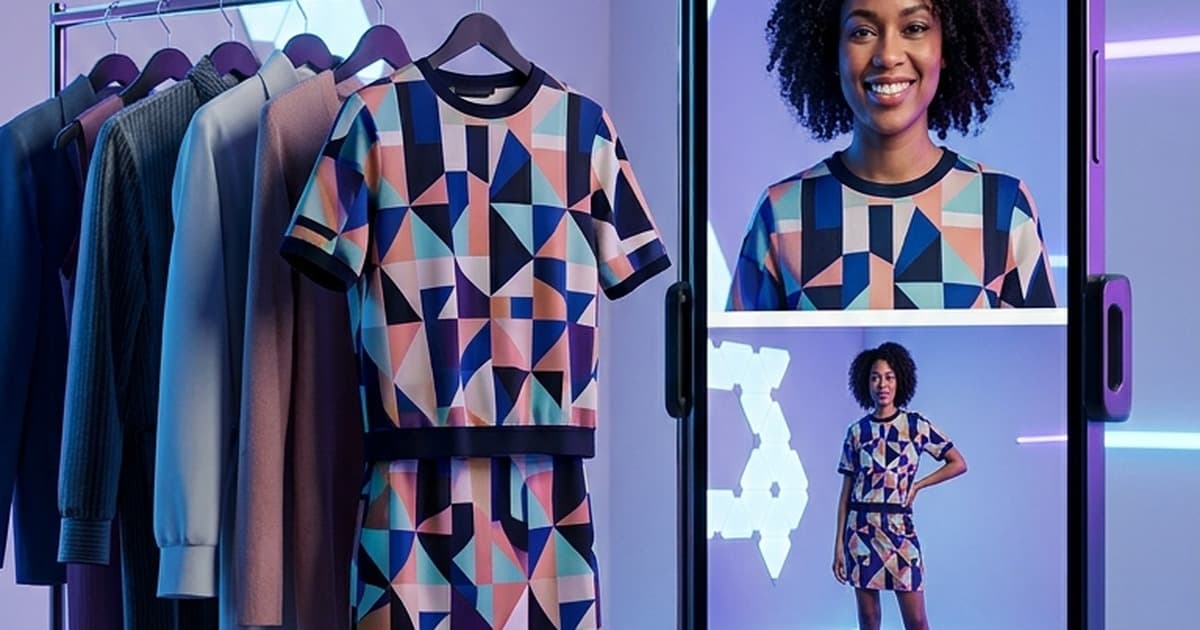
Fashion has the highest return rate of any ecommerce category. Not electronics. Not furniture. Clothing and shoes. And the average isn't 10% or even 15% - it's 30 to 40% for most online fashion retailers, with some categories running even higher.
That's nearly one in three items shipped coming right back. The logistics cost alone can eat 20-65% of the item's original sale price, according to NRF data. Add in restocking labor, reverse shipping, and the items that can't be resold as new, and you start to understand why fashion returns are quietly one of the biggest margin destroyers in ecommerce.
The good news: most of these returns are preventable. Not through stricter return policies or fees (which tend to hurt conversion). Through better visuals.
This post breaks down why shoppers return fashion items, which visual formats actually reduce return rates, and how AI is making it affordable to do this at every SKU, not just your hero products.
The Real Reason Shoppers Return Fashion
Ask a customer why they returned a clothing item and they'll say "it didn't fit" or "it looked different in person." But that's the symptom. The root cause is a failure of visualization at the point of purchase.
When someone shops for clothes in a physical store, they do a few things automatically:
- They hold the item up and look at the drape and weight
- They check it against their body before trying it on
- They see it under real lighting, from multiple angles
- They put it on and see how it moves
Online, they get a flat image. Often on a ghost mannequin, or worse, a plain white background with no reference for scale or proportion.
The shopper has to do all the mental work of imagining how it looks on a body like theirs. That's a lot of guesswork. And when the item arrives and the reality doesn't match their imagination, they return it.
This is what the industry calls "fit surprise" - the gap between what the product looked like online and what it looks like in real life. It drives the majority of fashion returns, and it's almost entirely a visual problem.
The Bracketing Habit Makes It Worse
There's a second behavior compounding the problem: bracketing. That's when shoppers deliberately order multiple sizes or colorways, planning to return everything that doesn't work.
Research from the NRF found that roughly half of Gen Z shoppers do this when buying clothes and shoes. For younger demographics, bracketing has become a standard shopping strategy. They're essentially using returns as a free fitting room.
You can't fully stop bracketing, but you can reduce it. When shoppers feel confident they've picked the right size and style before checking out, they bracket less. Better visuals are the most direct way to build that confidence.
Why Flat Lays and Ghost Mannequins Aren't Enough
Flat lays look clean. Ghost mannequin shots have a certain editorial quality. Neither tells a shopper what they actually need to know: how does this garment look on a real body?
The problem with flat lays is that fabric is designed to be worn. The way a loose-knit sweater drapes, how stretch denim moves, whether a blazer shoulder falls correctly, these things are completely invisible when the item is lying on a surface. You're showing the product at its least informative.
Ghost mannequin photography is better in some ways - at least the garment is shaped - but the absence of a human body still leaves shoppers guessing about proportion and fit. There's no reference for how the hem hits, how the waist sits relative to hips, or how the sleeves fall on an arm with real weight to it.
On-model photography solves both of these problems. When a garment is shown on a person:
- Shoppers can compare the model's measurements (if listed) to their own
- They see real drape and movement, not a static shape
- They get a genuine sense of proportion - where the waist hits, how long the leg looks, how the shoulder fits
- The item looks like something that belongs on a body, because it is
This is why brands with strong on-model imagery consistently outperform on return rates. The shopper arrives with a much more accurate mental picture of what they're buying.
If you're already thinking about how to upgrade your photography without expensive shoots, our guide to AI fashion photo studios covers exactly that.
The Data on Video and Returns
On-model photos are a significant step up from flat lays. But video takes it further - and the return rate data backs that up.
Product video shows what static photography can't: movement. When a shopper watches a model walk, sit, reach, and turn in a garment, they're seeing fit data that simply doesn't exist in a photo. The way jersey fabric moves versus structured woven cotton. Whether a dress rides up when walking. How much stretch there actually is in a "stretch fit" jean.
Several consistent findings emerge from brands that have added video to their product pages:
- Return rates drop 25-40% when shoppers view a product video before purchasing, across multiple fashion verticals
- Shoppers who watch a product video are significantly less likely to report "not as described" as their return reason
- Conversion rates increase alongside the return rate reduction - the customers who do buy after watching video are more committed purchases, not exploratory ones
The mechanism is simple: video closes the gap between expectation and reality. The shopper who's watched a 15-second clip of a jacket being worn, zipped, and moved in has a much more accurate mental model of what they're buying. Their purchase is more informed. Their surprise when it arrives is lower.
This is particularly powerful for:
- Stretch and knit fabrics - where feel and movement are the key purchase questions
- Structured pieces - blazers, coats, structured dresses - where fit at the shoulder and chest is critical
- Footwear - where video shows instep height, ankle coverage, and how shoes look while walking
- Plus and extended sizes - where shoppers especially need to see the garment on a body with similar proportions to theirs
For more on the conversion side of this equation, see our breakdown of how product video affects conversion rates.
The Scale Problem - And Why AI Solves It
Here's the objection every fashion team raises when this comes up: "We have 500 SKUs. We can't put every item on a model and film it."
Until recently, that was a real constraint. Traditional fashion photography and video production at scale is genuinely expensive.
A single model shoot - including studio rental, model fees, styling, hair and makeup, photography, and post-production - typically costs $1,500 to $5,000+ per day, and a day might only cover 20 to 30 looks. If you have hundreds or thousands of SKUs, doing on-model content for every item just isn't financially viable.
So brands made trade-offs. Hero products got model shoots. The rest got flat lays. And the return rate on those "rest" items stayed high, because shoppers were still guessing.
AI changes this math completely.
What AI On-Model Generation Actually Does
AI-powered product visual tools can take an existing flat lay or ghost mannequin photo and generate a photorealistic on-model version, placing the garment on a virtual model with accurate drape, shadow, and proportional rendering. No studio. No shoot day. No model fees.
The same applies to video. AI video generation can take a static product image and create a short clip showing the garment being worn and moved in - the kind of content that used to require a camera crew and a half-day shoot now takes minutes.
This is the breakthrough for fashion teams managing large catalogs. Instead of choosing which 10% of SKUs get model content, you can produce on-model visuals for everything. Every new arrival, every size variant, every colorway.
A few things that become possible when AI removes the cost barrier:
- Full catalog coverage - every SKU gets on-model treatment, not just bestsellers
- Multi-model diversity - show the same garment on different body types without multiple shoot days
- Size-specific visuals - different sized models for different size variants, so a shopper browsing a size 16 sees it on a comparable body
- Rapid new arrivals - new products can go live with complete visual content the same day they're uploaded to your catalog
- Video for every product - not just hero products, but your full assortment
The AI photo studio that turns flat lays to on-model images is already being used by fashion brands to rethink their entire visual production workflow.
Building a Visual Content Strategy That Reduces Returns
Knowing that better visuals reduce returns is one thing. Building a systematic approach is another. Here's how high-performing fashion teams think about this:
Layer Your Visual Content
Not every product needs the same level of content investment, even with AI reducing the cost barrier. A tiered approach makes sense:
Tier 1 - High velocity / high return items: Full model video, multiple angles, size-range model diversity. These are your items with the most at stake.
Tier 2 - Core catalog: On-model photography for all SKUs, short movement clips, accurate sizing visuals. AI makes this tier accessible now.
Tier 3 - Long tail / slow movers: At minimum, on-model static images for everything. No more pure flat lays.
Include Sizing Reference Information
On-model visuals work best when they're paired with explicit sizing context. Tell shoppers the model's height, weight, and the size they're wearing. This turns a visual into a real fitting reference.
A shopper who is 5'7" and 160 lbs, looking at a model who is 5'9" and 155 lbs wearing a size medium, has a very precise mental model of how that garment will fit. That specificity dramatically reduces the guesswork that leads to returns.
Make Movement Visible
For fabrics where movement matters, video is non-negotiable. A walk clip for dresses and skirts. A reach-and-sit for tops and jackets. A walk-and-step for shoes. These 10-15 second clips answer the questions that drive "not as described" returns.
If your team hasn't looked at AI video generation for this yet, creating product videos without filming is now fully achievable with the right tools.
Don't Neglect Color Accuracy
A significant portion of fashion returns come from color mismatch - the item looks different on screen than in person. Calibrated color photography, multiple shots under different lighting conditions, and honest descriptions of undertones all contribute.
AI image enhancement can also help here: adjusting shots to be more color-accurate and consistent across your catalog, so what shoppers see is what they get.
The Cost of Not Fixing This
It's worth being direct about the financial impact of high return rates, because it's easy to treat this as a "logistics problem" rather than a "visual content problem."
The math on a 30% return rate:
If your store does $2M in annual fashion revenue and your return rate is 30%, you're shipping $600,000 worth of product back. At an average processing cost of 35% of item value (shipping, labor, restocking), that's $210,000 in direct returns costs per year.
Reduce that return rate to 20% through better visuals and you've cut returns processing costs by $105,000 annually - on a $2M revenue base. For larger brands, the numbers scale dramatically.
That's before counting:
- The revenue lost when returned items can't be resold as new
- The customer service costs associated with handling return requests
- The negative reviews that mention "not as described"
- The lost lifetime value of customers who had a poor first experience and didn't come back
The return rate isn't just a logistics metric. It's a measure of how well your product content is doing its job.
Real Examples From the Industry
Several fashion brands have made public commitments to using richer visuals as a returns-reduction strategy:
ASOS has long shown items on multiple models of different sizes and body types, and reports that their on-model content significantly outperforms flat-lay alternatives in return-rate reduction. The brand's investment in model diversity is both a brand statement and a practical returns strategy.
Nordstrom uses video extensively on their product pages and has reported that shoppers who engage with video content return items at meaningfully lower rates than those who only view static images.
Everlane pairs their model photography with precise sizing guides tied to each model, creating a fitting reference that shoppers can use to self-select their size with confidence.
The pattern across all of these: invest in visuals that close the expectation-reality gap, and returns come down.
Where AI Fits Into Your 2026 Workflow
The competitive reality is shifting. Fashion brands that can produce on-model content at scale - for every SKU, every size, every colorway - have a structural advantage on return rates and conversion. Brands still relying on flat lays for most of their catalog are fighting with one hand tied behind their back.
AI tools have closed the cost gap. Generating on-model photography and short product videos no longer requires a studio budget. It requires the right tool and a workflow that integrates AI generation into your product launch process.
For fashion brands thinking about this, the relevant questions are now:
- Can we generate on-model visuals for our entire catalog, not just top sellers?
- Can we show the same item on multiple body types without multiple shoot days?
- Can we produce movement video for every SKU as part of our standard upload process?
- Can we update visuals seasonally without a new shoot every time?
If the answer to any of those is "not yet," that's where the returns problem is hiding.
The AI model swap tool for fashion brands is one piece of this. AI video content creation for fashion brands is another. Together they represent a complete rethink of how fashion visual content gets made.
Summary
Fashion's return problem isn't fundamentally a logistics problem or a policy problem. It's a visualization problem. Shoppers return clothes because they can't accurately imagine fit from a flat product image. Give them on-model photography and video, and the gap between expectation and reality closes. Returns come down.
The key takeaways:
- Fashion ecommerce return rates average 30-40%, far above any other category
- The root cause is fit surprise - the gap between how a product looked online and how it looks in real life
- On-model photos reduce returns by giving shoppers real fit context, proportion, and drape information
- Product video reduces returns further - 25-40% reduction is achievable when shoppers can see movement and wear before buying
- AI makes on-model content affordable at scale - every SKU can now have model-quality visuals without shoot day costs
- Sizing context paired with on-model imagery creates a true fitting reference that drives confident, committed purchases
The brands with the best returns metrics in 2026 won't be the ones with the strictest return policies. They'll be the ones whose product pages made the shopper feel like they'd already tried the item on.
Start Producing On-Model Content at Scale
Tellos AI Photo + Video Studio lets fashion teams generate photorealistic on-model images and product videos directly from existing product photos - no studio, no model, no shoot day required.
Whether you're converting a catalog of flat lays to on-model, adding movement video to product pages, or building size-diverse visual content without multiple shoots, Tellos handles the production so your team can focus on the creative decisions.
See what Tellos AI Photo + Video Studio can do for your return rates.