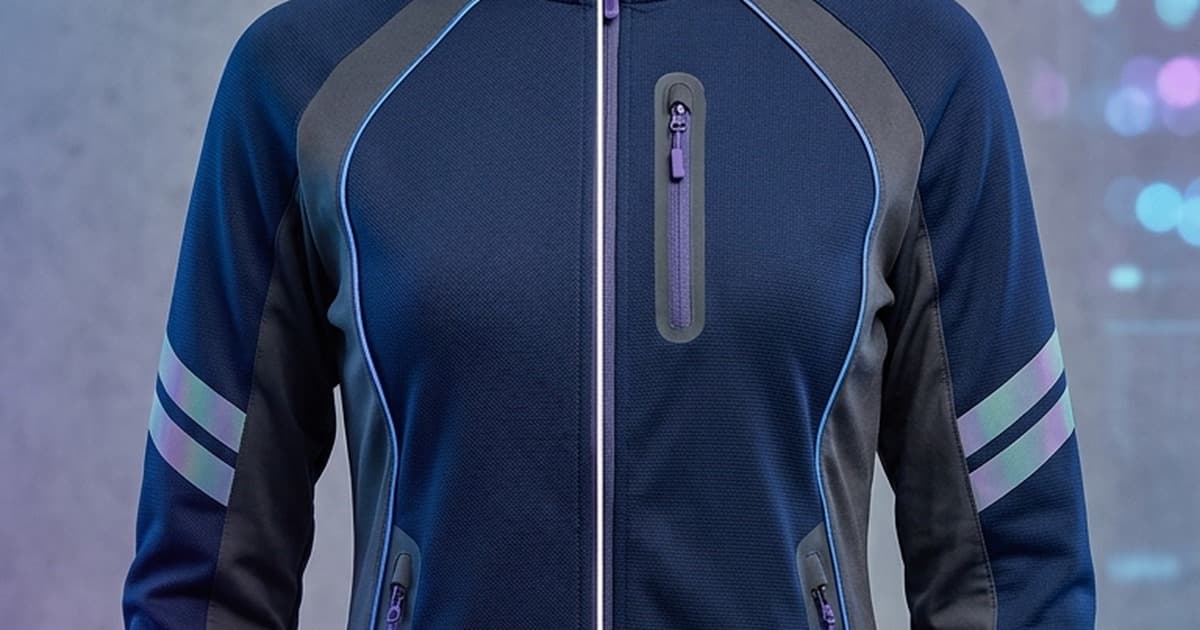
Ghost mannequin photography has been fashion's go-to trick for decades. A hollow form fills the garment, the mannequin gets edited out in post, and you're left with a clean shot that shows exactly how a shirt drapes, where a jacket's shoulders sit, or how a dress flows — without paying for a model or booking a studio day.
It's clever. It works. And for a long time, it was the best option available for small and mid-size fashion brands that wanted polished product images on a budget.
But "best option available" has changed. AI can now turn a flat-lay photo or a basic mannequin shot into a photorealistic on-model image in minutes — no studio, no editing software, no ghost to erase. And fashion brands are noticing.
This post breaks down exactly what ghost mannequin photography is, where it still makes sense, and why an increasing number of ecommerce teams are moving to AI-powered product photography instead.
What Is Ghost Mannequin Photography?
Ghost mannequin photography (also called invisible mannequin photography or the ghost mannequin effect) is a product photography technique where a garment is placed on a mannequin, photographed, and then the mannequin is digitally removed in post-production.
The result is a clean, three-dimensional product image that shows the garment's true shape — collar structure, shoulder line, sleeve fall, chest fit — as if it's being worn by an invisible person.
Why Brands Use It
- Shape and structure — Unlike flat-lays, ghost mannequin shots show depth and form. A structured blazer looks like a blazer, not a pile of fabric.
- Consistency — Every image follows the same format, making category pages and product grids look uniform.
- No model cost — You avoid model fees, which can run $150–$500/hour for a decent professional.
- Focus on the garment — No face, no lifestyle distractions. Just the product.
For high-volume product catalogues — think wholesale suppliers, multi-SKU basics brands, B2B fashion — ghost mannequin photography became an industry standard precisely because it's scalable and neutral.
Where It's Most Common
You'll still see ghost mannequin photography heavily used in:
- Wholesale and B2B fashion catalogues
- Basics and essentials brands (tees, hoodies, plain trousers)
- Activewear where garment structure matters more than styling
- Lookbooks for new season arrivals before model shoots are scheduled
It makes sense in these contexts. But it comes with a real cost structure that hasn't changed.
The Real Cost of Ghost Mannequin Photography
Ghost mannequin photography is cheaper than a full model shoot — but "cheaper" is relative. Here's what a typical production run actually looks like:
Studio and Equipment
Renting a basic photography studio with lighting runs £200–£500 per day in most UK cities, higher in London. You need at least a half-day even for a small product run.
Mannequin Investment
A quality mannequin set (torso, arms, detachable neck pieces for the collar shot) costs £300–£800 upfront. You typically need multiple for different garment types — dress forms, trouser forms, and torso-only for tops.
Photographer Fees
A photographer comfortable with product and fashion photography: £300–£800 per day, plus potential day rates for assistants. Budget-end freelancers exist, but the ghost mannequin technique requires technical skill — particularly for collar and cuff detail shots that require multiple exposures.
Post-Production
The ghost mannequin effect isn't done in-camera. Every image needs retouching to:
- Remove the mannequin
- Fill in the neck/collar area using the underside shot
- Clean up fabric creases
- Colour-correct
A professional retoucher charges £5–£25 per image. For a 50-piece collection, that's £250–£1,250 just in editing.
Total for a 50-SKU Shoot
| Item | Typical Cost |
|---|---|
| Studio hire (half-day) | £300 |
| Photographer (half-day) | £400 |
| Post-production (50 images @ £10) | £500 |
| Mannequin amortised | £100 |
| Total | ~£1,300 |
That's £26 per product image for a fairly efficient operation. For a 200-piece collection? You're looking at £5,000–£7,000 before you even think about additional angles or lifestyle shots.
And that doesn't account for lead time. From booking to final retouched images, a ghost mannequin shoot typically takes 1–3 weeks.
The Limitations No One Talks About
Ghost mannequin photography solves some problems but introduces others:
It Still Doesn't Show Real Fit
The ghost mannequin effect is hollow by definition. It shows the garment hanging off a form — not how it moves on a body, not how the waist sits, not how the hem falls when someone is actually wearing it. Customers can tell. It's a clinical representation, not an aspirational one.
Mannequins Lie
Standard mannequins use a fixed size (usually UK 10–12). Your garment will look proportionally different on the mannequin than it does on an actual size 8 or size 16 body. The ghost mannequin effect creates an idealized version of the product that may not reflect reality.
It Doesn't Scale Well for Variations
Got the same jacket in 8 colours? You're photographing it 8 times. Or you're doing one hero shot and Photoshopping the rest — which often looks cheap and inconsistent. Ghost mannequin photography is time-intensive for large SKU counts.
Post-Production Bottleneck
The "invisible" part of invisible mannequin photography is where things break down. The collar fill technique — shooting the inside of the collar separately and compositing — requires careful alignment. Rushed retouching produces images with obvious cut lines and mismatched fabric texture. Quality control is slow and manual.
How AI Replaces Ghost Mannequin Photography
This is where it gets interesting. AI product photography doesn't just replicate what ghost mannequin photography does — it completely sidesteps the problem.
Instead of putting a garment on a mannequin to show its shape, then editing the mannequin out, AI generates a realistic model wearing the garment directly from your source image.
You upload a flat-lay or a basic mannequin shot. The AI understands the garment's structure, fabric type, and silhouette. It then renders a photorealistic on-model image — with a real-looking person, in your chosen environment, at the size and body type you specify.
What This Looks Like in Practice
- Input: Flat-lay photo of a bomber jacket on a clean background
- Output: Photorealistic image of the jacket being worn, styled, with natural fabric drape
The process takes minutes, not weeks. There's no studio to book, no mannequin to clean up, no retoucher to wait on.
Tools like Tellos AI Photo Studio are specifically built for fashion ecommerce teams — allowing brands to generate on-model images at scale without a photography budget.
We've written more about this in our guide to AI fashion photoshoots: studio-quality images without a shoot and the step-by-step process of going from flat-lay to on-model with AI.
Ghost Mannequin AI: What It Actually Does Better
Let's be specific about where AI outperforms ghost mannequin photography.
1. It Shows Real Fit
An AI-generated on-model image shows how the garment behaves on a body — where it cinches, how the hem falls, whether the collar sits flat. The ghost mannequin effect can't do this. The result is a more informative product image that reduces customer uncertainty and, by extension, returns.
2. Instant Colour Variants
With AI, you can generate all 8 colour variants of a jacket from a single base shoot. The AI maintains the garment's structure and model pose while applying each colourway accurately. No re-shooting, no manual Photoshop swaps.
3. Multiple Models, Zero Extra Cost
AI allows you to generate the same product on multiple model types — different body shapes, skin tones, ages — without any incremental cost. This matters increasingly for brands targeting diverse audiences or running regional campaigns with different demographic profiles.
This directly addresses a core weakness of traditional ghost mannequin photography: the product always appears on the same form, regardless of who's actually buying it.
4. Lifestyle Contexts
Ghost mannequin photography is inherently studio/white-background. AI can place the same garment (and invisible mannequin replaced by a real model) in any environment — an urban street, a café, a beach — in a single generation pass. No location scout, no travel.
5. Speed That Matches Trend Cycles
Fast fashion and trend-responsive brands can't afford 1–3 week turnarounds. AI-generated product photography turns around in hours. For brands that need to respond to a viral TikTok trend with new product imagery the same week, that speed difference is commercially significant.
Side-by-Side: Ghost Mannequin vs AI Photography
| Factor | Ghost Mannequin Photography | AI Photography |
|---|---|---|
| Setup required | Studio, mannequin, photographer | Single flat-lay or stock image |
| Cost per image | £15–£50+ | £1–£5 |
| Turnaround | 1–3 weeks | Hours |
| On-model look | No — empty shell | Yes — photorealistic |
| Colour variants | Re-shoot each | Auto-generate from one |
| Body diversity | One fixed mannequin size | Multiple model types |
| Lifestyle contexts | Limited (white bg typical) | Any environment |
| Post-production | Significant (compositing) | Minimal |
| Scales to 500 SKUs | Expensive and slow | Affordable and fast |
The unit economics alone make a compelling case. But for growing fashion brands, the bigger story is what you can now do that you couldn't before — generate catalogue-quality imagery for every SKU, at every colourway, on multiple model types, in any context, without a production team.
When Ghost Mannequin Photography Still Makes Sense
AI isn't the answer for every situation. Ghost mannequin photography still has a place:
When you need extreme garment accuracy: For technical outerwear, structured tailoring, or high-end couture where every seam detail matters, a physical photograph of the garment may still be the gold standard. AI is excellent but not infallible on fine fabric details.
When you're shooting for print at extremely high resolution (billboards, luxury print catalogues), a real photo provides higher native resolution than most current AI generators.
When your brand aesthetic is specifically product-focused: Some brands deliberately use the clinical ghost mannequin look as part of their visual identity — particularly workwear, uniform, and B2B apparel suppliers where lifestyle context would be out of place.
For most fashion ecommerce brands selling through Shopify, Amazon, or their own DTC sites, though, ghost mannequin photography's advantages are largely theoretical at this point.
The Transition: How Brands Are Making the Switch
The brands switching from ghost mannequin photography to AI aren't abandoning their existing assets. They're building on them.
The typical workflow looks like this:
- Keep using flat-lay photography for product intake — it's fast, cheap, and creates the source assets AI needs
- Feed flat-lays into AI to generate on-model outputs
- Run ghost mannequin and AI outputs in parallel initially to A/B test conversion impact
- Phase out the ghost mannequin post-production once AI performance is validated
The transition cost is low because flat-lay photography (which most brands already do) is exactly what AI models are trained on. You're not replacing your photography workflow — you're adding an output layer on top of it.
For brands that have existing ghost mannequin libraries, many AI platforms can accept those as input too. Your existing assets don't go to waste — they become the training data for your new AI-generated imagery.
We've covered the full mannequin-to-model AI process in detail, along with a breakdown of fashion photography costs in 2026 if you want the full numbers.
What to Look For in a Ghost Mannequin AI Tool
Not all AI product photography tools are built the same. Here's what matters for fashion brands specifically:
Fabric and texture fidelity — Does the AI accurately render silk vs cotton vs denim? Cheap tools hallucinate fabric textures and produce images that don't match the actual product.
Garment structure preservation — A structured blazer should maintain its shoulder shape; a relaxed hoodie should drape naturally. The AI should understand garment construction, not just apply texture to a body shape.
Model diversity controls — You should be able to specify body type, skin tone, and age range without prompting workarounds.
Batch processing — If you're processing 200+ SKUs, individual image generation is impractical. Look for tools with bulk upload and batch generation.
Integration with your ecommerce stack — Shopify, Amazon Seller Central, Klaviyo — the images need to end up in your workflow, not just in a folder.
Brand consistency — The ability to define a house model, a consistent background aesthetic, or a signature lighting style that applies across all your generations.
Tellos AI Photo Studio is built specifically for ecommerce fashion brands dealing with exactly these requirements — combining photorealistic image generation with the workflow integrations that make bulk production practical.
The ROI of Switching
The financial case for moving from ghost mannequin photography to AI is straightforward for most brands, but there's a conversion rate story too.
Research consistently shows that on-model images outperform product-only images for conversion rate — with studies suggesting 20–30% higher conversion rates for apparel shown on a model versus a ghost mannequin or flat-lay. If your current product pages use ghost mannequin photography, that gap represents real revenue.
At scale, the math gets compelling fast:
- 500 SKUs × £26/image (ghost mannequin) = £13,000 in photography costs
- 500 SKUs × £3/image (AI) = £1,500 in photography costs
- £11,500 saved — before accounting for improved conversion rate
That's not a marginal improvement. For growing brands with large catalogues, this is a budget reallocation that funds real growth activities.
Check out our virtual fashion models guide for more on how AI modelling is reshaping fashion photography economics — and our AI-generated clothing photos accuracy guide for an honest look at where the technology stands today.
Ready to Replace Your Ghost Mannequin?
Ghost mannequin photography was a smart solution to a real problem: showing garment shape at scale, without the cost of a model. But the problem it solved — cost and scalability of on-model imagery — has been solved better.
AI product photography gives you on-model images (not hollow shells), at a fraction of the cost, with turnarounds measured in hours not weeks, and at a scale that ghost mannequin production can't match.
If you're still paying for mannequin compositing and retouching on every product line, it's worth running the numbers on what switching would save — and what higher conversion rates would add.
Try Tellos AI Photo Studio — upload your flat-lays or existing mannequin shots and generate photorealistic on-model images at scale. No studio booking required.