Traditional fashion photography is expensive, slow, and hard to scale. A single studio day — models, photographer, lighting crew, wardrobe stylists — can run $5,000 to $20,000+. And that gets you a handful of looks, for one season, for one market.
Now brands are doing AI fashion photoshoots instead. One flat-lay image. One AI model. Hundreds of on-model product photos in hours, not weeks — at a fraction of the cost.
Here's how it works, why brands are switching, and what you can actually do with it.
What Is an AI Fashion Photoshoot?
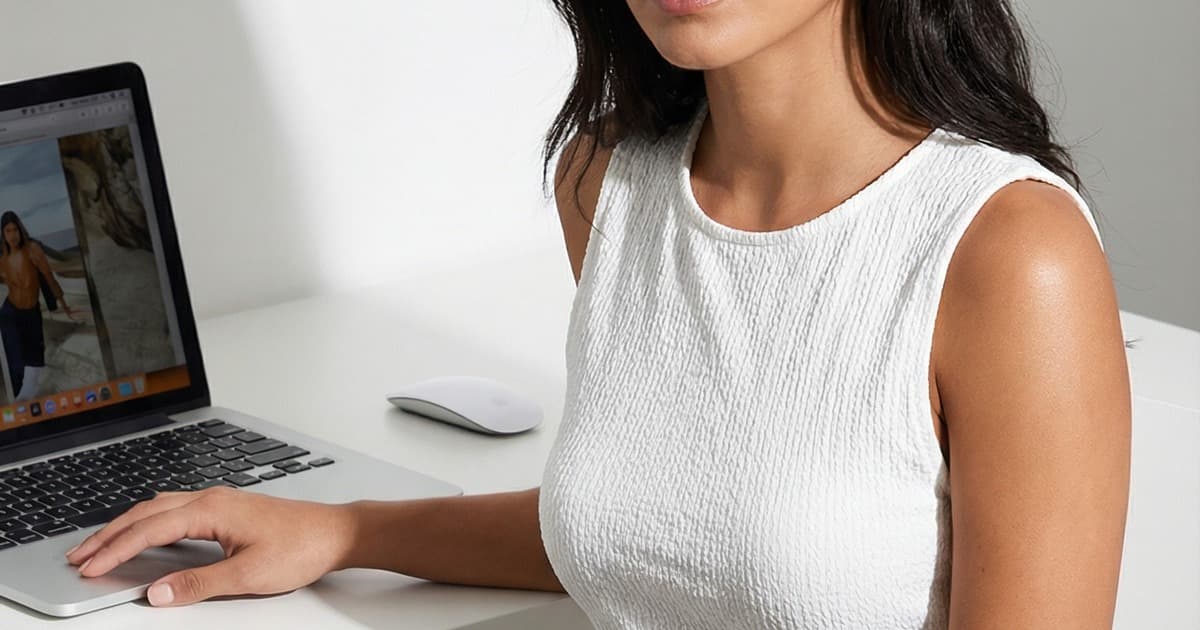
An AI fashion photoshoot is the process of using AI models to generate realistic, on-model product images from existing photos — typically flat-lays or mannequin shots.
Instead of booking a model and a studio, you upload what you already have. The AI renders your product worn on a photorealistic AI model, preserving every detail of the garment: fabric texture, stitching, drape, color, fit.
The result? Studio-quality AI fashion photos that look like they were shot on a real model, in a real location — without either.
This isn't CGI from the early 2000s. Modern AI fashion photography, powered by diffusion models and custom-trained AI, produces images that routinely pass as real photography. Shoppers often can't tell the difference.
The Core Use Case: Flat-Lay → On-Model
Most fashion brands already have flat-lay photography. It's cheaper to produce and easier to standardize. But flat-lays don't convert as well as on-model images — shoppers want to see how a garment fits, moves, and drapes on a real person.
AI bridges that gap. You bring your flat-lays. The AI brings the model.
What gets preserved:
- Fabric texture and sheen (silk, denim, knitwear — all render accurately)
- Stitching details, seams, buttons, zippers
- Fit lines and garment silhouette
- Color accuracy across different lighting conditions
- Print patterns and graphic placements
What you control:
- Model type (body shape, skin tone, height)
- Pose and stance
- Background and setting
- Lighting style (studio, natural, lifestyle)
- Output format (PDP hero shot, lifestyle, editorial, social crop)
Why Fashion Brands Are Switching to AI Fashion Photography
The math is simple. But the operational benefits go deeper than just cost savings.
1. Cost
A traditional on-model photoshoot for a 50-piece collection costs anywhere from $15,000 to $50,000+ when you factor in:
- Model fees and casting
- Photographer and retoucher day rates
- Studio rental
- Styling and wardrobe prep
- Post-production
An AI fashion photoshoot for the same 50-piece collection might cost $500–$2,000 total. The per-image economics change completely.
For brands scaling from 50 SKUs to 500 SKUs — which is common on Shopify — AI isn't just cheaper. It's the only option that makes financial sense.
2. Speed
Traditional photoshoot timelines look like this:
- 2–4 weeks to book, schedule, and prep
- 1–3 shoot days
- 1–2 weeks post-production
- Final assets delivered 4–6 weeks after concept
AI fashion photography timelines:
- Upload flat-lay or mannequin image
- Generate on-model photos in minutes to hours
- Review and approve same day
- Live on your PDP in 24 hours
For trend-driven fashion brands, speed is a competitive advantage. Being able to launch a new product with full on-model imagery the day it's available for sale — instead of weeks later — directly impacts revenue.
3. Scale
This is where AI changes the game entirely.
Traditional photography has a hard ceiling. You can only shoot so many products per day. The cost scales linearly. Adding 100 more SKUs means 100 more images means more shoots, more days, more budget.
AI doesn't have that ceiling. Generating 10 images and generating 10,000 images have nearly the same per-unit cost. Brands can now run every SKU on a model — including basics, SKU variations, color variants — without the economics falling apart.
That's the shift: from "we can only do on-model for hero products" to "every product gets on-model treatment."
4. Consistency
Real photoshoots introduce variation. Different photographers, different days, different models means your PDPs look inconsistent. One photo has warm studio light, the next has a different angle, a third model's proportions show the fit differently.
AI fashion photos can be generated with consistent parameters across your entire catalog. Same model. Same lighting angle. Same background. That consistency builds brand trust and makes your storefront look intentional.
How It Works: Custom AI Models and Brand Fidelity
Not all AI fashion photography tools are the same. The key differentiator is how well the AI preserves the actual garment — not just something that looks vaguely like it.
Generic image generation models (Midjourney, DALL-E, etc.) will hallucinate. They'll generate a shirt that looks like your shirt but has different buttons, wrong sleeve length, invented patterns. That's useless for ecommerce.
Professional AI fashion photoshoot platforms use custom AI models trained specifically on fashion, product photography, and garment fidelity. They're designed to:
- Understand garment structure — the AI knows what a collar is, what a hem is, how fabric hangs on a body
- Lock in product details — stitching, hardware, prints, textures are preserved from your input image
- Generate realistic drape and fit — the output reflects how the garment actually fits, not a generic representation
At Tellos AI Photo Studio, the custom model is trained to maintain hyper-realistic preservation of fabric texture, stitching, and fit. This is what separates AI fashion photography for ecommerce from general image generation.
The Model Swap Feature
One of the most powerful capabilities in modern AI fashion photoshoots is model swapping — generating the same product on multiple different AI models without running a new shoot.
This is huge for brands serving diverse audiences. Showing your product on models of different:
- Body types and sizes
- Skin tones
- Age ranges
- Heights
...used to mean booking multiple models for every single product. Now it's a one-click operation. You upload once, and the AI generates your product on whatever model selection you choose.
For brands that care about inclusive representation (and their customers do), this is transformational.
Use Cases: Where AI Fashion Photos Actually Get Used
Understanding how brands deploy AI fashion photography helps clarify the value. It's not just about PDPs.
Product Detail Pages (PDPs)
This is the primary use case. On-model images on PDPs consistently outperform flat-lays for conversion. Customers can see:
- How the garment fits the body
- How it drapes and moves
- Whether it looks like they imagined it would
For Shopify brands, having on-model images for every product — especially every color variant — reduces return rates and increases add-to-cart rates. Returns in fashion ecommerce are largely driven by fit expectations. On-model imagery sets better expectations.
Lookbooks and Seasonal Campaigns
Lookbooks require editorial-style on-model photography across a full collection. Traditionally, this means a dedicated shoot with matching styling across all pieces. Now:
- Generate all pieces on the same AI model
- Select consistent backgrounds and lighting
- Produce a visually cohesive collection story
- Do it in a day
For smaller brands that couldn't previously afford lookbook-style photography, this unlocks an entirely new marketing format.
Social Media Content
AI fashion photos work across all social formats:
- Instagram feed posts (product showcase)
- Stories and Reels (swipe-through variations)
- Pinterest pins (high-converting for fashion categories)
- TikTok organic content
The ability to generate multiple crops and compositions from a single session means you can populate your content calendar without burning a week of production time.
If you're thinking about how AI content fits into your full video and social strategy, this guide on AI video content for Shopify and Amazon covers the broader content workflow.
Email and Paid Ads
Email marketing for fashion drives significant revenue when the imagery is compelling. AI fashion photography enables:
- New arrivals announced with on-model hero images the day they go live
- A/B testing different models to see which performs with your audience
- Fresh ad creative without scheduling shoots
For paid social, where creative fatigue is a constant problem, the ability to quickly generate new model variations and background options extends the life of successful campaigns. See also: AI video ads for Shopify brands for how to turn product photos into video content.
International Markets
Brands selling in multiple regions can localize model selection to each market — showing local models to local audiences — without running separate shoots per market. That's a significant advantage for global DTC brands.
Virtual Fashion Photoshoot vs. Traditional: The Real Comparison
Let's lay it out directly.
The traditional photoshoot isn't dead. There are cases where real photography is still the right call — hero campaigns, brand campaigns, flagship product launches where the shoot itself is part of the brand story. But for catalog photography — which is the vast majority of fashion ecommerce imagery — virtual fashion photoshoots are the better business decision for most brands.
What to Look for in an AI Fashion Photoshoot Platform
Not every tool calling itself "AI photography" is equal. Here's what separates platforms that work from those that don't:
Garment Fidelity Above All
If the AI can't preserve your product's actual details, the output is useless. Test any platform with a complex print, a detailed knit, or a garment with specific hardware. If the output hallucinates details that aren't in your original image, move on.
Custom Model Training
Generic models have generic limitations. Platforms built on fashion-specific AI — trained on apparel, garment photography, and fit — produce dramatically better results than general-purpose image generators. Look for platforms that mention custom model training for fashion.
Output Formats for Ecommerce
You need images in the right formats for where they'll be used:
- PDP hero shots (clean background, consistent angle)
- Lifestyle shots (environmental backgrounds)
- Square crops for social
- Transparent background exports for ads
Make sure the platform supports the output formats your team actually uses.
Integration with Your Workflow
The best AI fashion photography tool is the one your team will actually use. Look for:
- Shopify integration or easy export
- Batch processing for catalog work
- Simple interface that doesn't require design expertise
Getting Started: What You Need
Starting an AI fashion photoshoot is simpler than you might expect. Here's what to prepare:
Input assets:
- Flat-lay photos (minimum 1000px on the short side, well-lit, clean background)
- Or mannequin shots (remove or keep the mannequin — either works)
- Product metadata (size reference, fabric details help with prompting)
What you decide:
- Model selection (demographics, body type)
- Pose style (standing, editorial, lifestyle)
- Background setting (studio white, lifestyle environment, editorial)
- Number of outputs per product
What AI handles:
- Garment placement on the model
- Fabric drape and fit simulation
- Lighting consistency
- Background rendering
- Post-processing
That's it. No location scouting. No talent booking. No shoot prep. Just upload and generate.
The Shift Happening Right Now in Fashion Ecommerce
AI fashion photography isn't a future trend — it's being adopted now by brands that need to move faster and spend smarter. The brands winning on Shopify in 2026 are the ones who figured out how to run catalog-scale content production without catalog-scale budgets.
The combination of AI photo and video content is becoming the standard operating model for fashion ecommerce. Brands that crack this workflow are outpacing competitors on:
- Time to market for new products
- Breadth of on-model coverage across their catalog
- Visual consistency and brand professionalism
- Content volume for paid and organic channels
If you haven't explored what AI can do for your product photography, you're already behind.
Want to understand how AI-generated content fits into the broader picture of AI for ecommerce content creation? That post covers the full content stack.
Start Your AI Fashion Photoshoot with Tellos
Tellos AI Photo Studio is built specifically for fashion and apparel brands on Shopify. It converts your flat-lay or mannequin photos into studio-quality on-model AI fashion photos — preserving every detail of your garment.
What you get with Tellos:
- Hyper-realistic fabric, texture, and fit preservation
- Model swap — try your products on multiple AI models instantly
- Consistent output format for PDP, lookbook, social, and ads
- Batch processing for catalog-scale production
- Built for Shopify brands — designed for ecommerce, not just design studios
Stop scheduling shoots. Start generating.