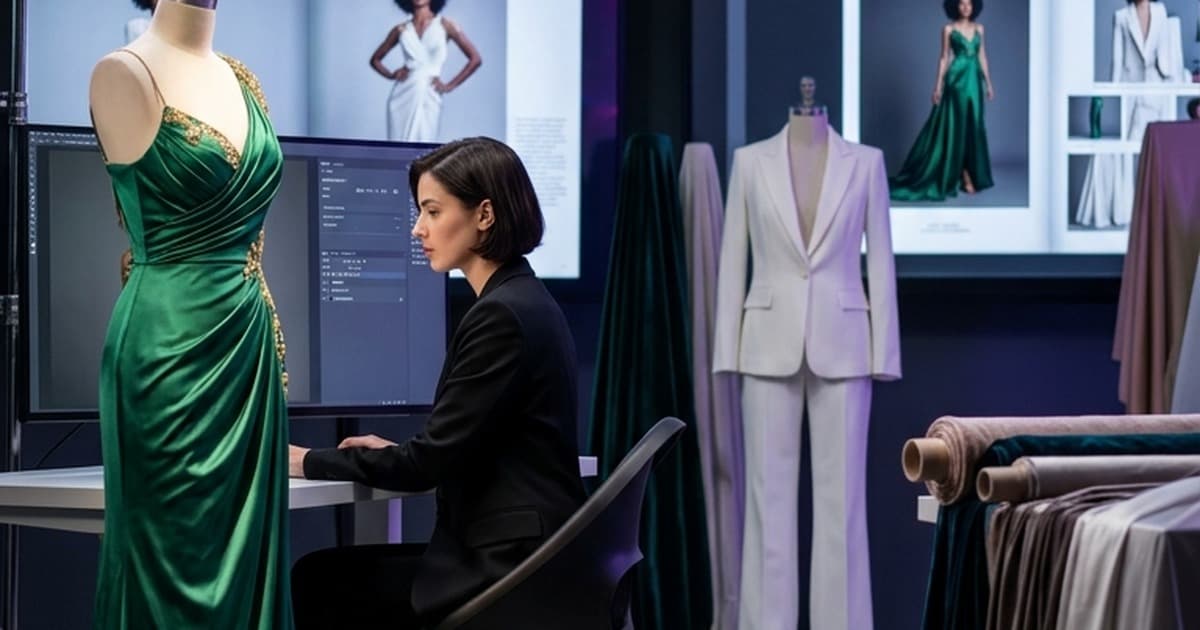
Three years ago, a mid-sized fashion brand might shoot one seasonal lookbook, produce two to three campaign videos, and call it done. That was enough. Today, the same brand is expected to publish fresh content across Instagram Reels, TikTok, Pinterest, YouTube Shorts, and its own product pages — every single week, ideally every single day.
The math doesn't work with traditional production. A single professional photo shoot costs anywhere from $5,000 to $50,000 when you factor in studio rental, photographer, models, stylists, retouching, and logistics. Video production is even heavier. And neither gets you the volume modern channels demand.
That's why AI content creation for fashion has gone from "interesting experiment" to operational necessity. The brands winning in 2026 aren't the ones with the biggest studios — they're the ones that figured out the AI content stack first.
This is the playbook.
The State of AI Content for Fashion in 2026
The shift has been fast. In 2023, AI fashion photography was a party trick — results were uncanny, off-brand, and obviously fake. By 2025, models like Flux, SDXL, and purpose-built ecommerce fine-tunes had closed the quality gap. In 2026, the question isn't whether AI content looks good. It does. The question is how to run it at scale without losing brand identity.
Here's where things stand across the three content layers fashion brands need to master:
Layer 1 — AI Photos: Product photography, on-model imagery, lifestyle shots, and flat lays. This is the most mature layer. Brands are generating product-on-model images without physical shoots, creating diverse model representations across markets, and producing seasonal campaign imagery in days rather than months.
Layer 2 — AI Video: Short-form product videos, try-on demonstrations, brand films, and ad creatives. This layer matured fast in 2025, powered by models like Kling, Runway, and Sora. Fashion brands are now converting static product photos into dynamic video content without a single filming day.
Layer 3 — Shoppable Experiences: The most forward-looking layer. AI-powered shoppable video that links product moments to purchase, interactive lookbooks, and personalized content feeds that adjust to viewer behavior. This is where early movers are building the widest competitive moats.
The Full AI Content Stack for Fashion Brands
AI Photography: From Flat Lay to On-Model in Minutes
Traditional fashion photography requires a garment to exist physically before it can be shot. AI changes that constraint entirely. Brands are now generating on-model product imagery from flat lay photos, 3D renders, or even design mockups — before the product ships from the factory.
The practical workflow looks like this:
- Upload your product assets — flat lay photo, 360° renders, or manufacturer samples
- Choose model parameters — body type, skin tone, pose, setting
- Generate at scale — produce 20–50 variations per SKU in under an hour
- Review and publish — use the best variations for PDP, ads, and social
For brands with large catalogs, this is a game-changer. A fashion retailer with 500 SKUs launching a new season no longer needs to book five days of studio time and three models. They need a trained AI model that understands their brand aesthetic and a structured workflow. We covered this in detail in our post on AI fashion photoshoots: studio-quality images without a shoot.
The flat-lay-to-on-model workflow is one of the highest-ROI applications. You shoot the product flat (easy, cheap, fast), then use AI to dress a virtual model with it. The results are indistinguishable from a production shoot for most ecommerce contexts. See how this workflow plays out in AI photo studio: from flat lay to on-model.
Custom brand-trained AI models are the premium tier. Rather than using a generic AI model, you fine-tune on your own brand's visual identity — your aesthetic, your model types, your lighting style. Once trained, every generation is on-brand by default. More on that approach here: Custom AI models for fashion brands.
AI Video: Turning Product Photos into Scroll-Stopping Content
If AI photography is mature, AI video is the current frontier. The quality leap from 2024 to 2026 has been dramatic. What used to produce jittery, artifact-riddled clips now generates smooth, cinematic product content that performs on paid social.
The core use cases for fashion AI video in 2026:
Product-to-video animation: Take a hero product image and animate it — fabric movement, subtle camera drift, lighting shifts. A still becomes a Reel. This alone multiplies the content output from every photo shoot by 5–10x.
Try-on and styling videos: AI models demonstrating garments in motion. Walk cycles, styling overlays, outfit transitions. These outperform static images on every major platform in terms of scroll-stop rate and click-through.
Ad creative at scale: Need 15 variations of a video ad for A/B testing across Meta, TikTok, and YouTube? AI video workflows can produce those variations — different hooks, different endings, different formats — in the time it used to take to cut a single edit.
Brand films and campaigns: Full-length narrative content for brand storytelling. Brands are generating seasonal campaign films using AI-generated scenes composited with real hero footage, dramatically cutting production costs while maintaining cinematic quality.
We covered the mechanics of going from product photos to video in depth: AI fashion video generator: product photos to video. And if you're just getting started with AI video for ecommerce in general, this guide on AI Video Studio for ecommerce is a good primer.
Shoppable Experiences: Closing the Loop Between Content and Commerce
The third layer is where AI content creation intersects with AI commerce. Shoppable video — where products are tagged, clickable, and purchasable inside the content itself — has been talked about for years. In 2026, the infrastructure is finally there.
For fashion brands specifically:
Shoppable Reels and TikToks — AI-generated product videos with embedded product links. A viewer watches a styling video, taps the jacket, and lands on the PDP. Conversion rates on shoppable video consistently outperform static ads in the fashion vertical.
Interactive lookbooks — AI-generated seasonal lookbooks where every outfit is shoppable. Instead of a PDF or static gallery, it's an immersive scroll experience where the content does the selling.
Personalized content feeds — AI that surfaces the right product content to the right visitor based on their browse history, purchase data, and demographic signals. The content isn't just shoppable, it's targeted.
For a deeper look at the technical setup on Shopify, check out shoppable videos for Shopify: the complete setup guide for fashion brands.
How Leading Brands Are Using AI Content
The early adopters in fashion AI content are not always the biggest names. Many are mid-market DTC brands with lean teams and aggressive growth targets — exactly the brands that feel the content bottleneck most acutely.
Here are the patterns that show up consistently across successful implementations:
Pattern 1: AI-first catalog photography Brands that launch new SKUs with AI-generated on-model imagery before the physical product is ready to ship. Pre-launch PDPs with AI photography see stronger early traffic and reduced return rates compared to launching with manufacturer photos.
Pattern 2: One shoot, infinite variations A single creative shoot generates the "source" content — hero images, short video clips, key lifestyle shots. The AI layer then extends that into 50+ variations: different crops, different formats, different model representations for different markets, animated versions for paid social. One day of production, weeks of content.
Pattern 3: Seasonal campaigns without seasonal shoots Instead of booking a full production for spring/summer and another for fall/winter, brands are running one major shoot per year and using AI to generate seasonal variations. Swap backgrounds, lighting, accessories, and styling through AI — not through a new shoot.
Pattern 4: Market-specific content at scale A European brand expanding into the US needs different model representations, different aesthetic contexts, and potentially different styling. AI makes it possible to generate market-specific content from a single set of source assets — without flying models or booking studios across three continents.
ROI vs. Traditional Production: The Numbers That Matter
Let's get concrete. The ROI case for AI content creation in fashion is strong, and it's strongest in three areas:
Cost Per Asset
| Content Type | Traditional Production | AI-Generated | Cost Reduction |
|---|---|---|---|
| On-model product photo | $150–$400/image | $5–$20/image | 85–95% |
| Lifestyle campaign photo | $500–$2,000/image | $20–$80/image | 90–96% |
| 15-sec product video | $3,000–$15,000 | $100–$500 | 95–97% |
| 30-sec brand film | $20,000–$100,000+ | $1,000–$5,000 | 95–98% |
Time to Publish
Traditional fashion photography has a 4–8 week production timeline from concept to published asset. Briefing, booking, shooting, editing, reviewing, retouching. AI content creation compresses that to 24–72 hours for most workflows. For fast fashion brands or brands responding to trend cycles, this speed is often worth more than the cost savings.
Content Volume
The brands seeing the strongest performance lifts aren't just cutting costs — they're increasing content volume. More SKUs with on-model imagery. More ad creative variations for testing. More Reels, more Stories, more shoppable content per product. The lift in content volume tends to produce a measurable lift in organic reach, paid ad efficiency, and conversion rate.
A useful benchmark: brands that move from <5 content pieces per SKU to >20 content pieces per SKU typically see a 15–35% improvement in conversion rate on those PDPs, driven by better buyer confidence and algorithm-friendly content density.
What to Look for in an AI Content Platform
Not all AI content tools are built for fashion, and not all of them will serve your brand's needs. Here's what to evaluate when choosing a platform:
1. Brand Training and Consistency
Generic AI image tools will produce generic results. The platforms worth investing in for fashion are those that allow you to train on your brand's visual DNA — your model aesthetic, your lighting style, your color palette. Without brand training, you'll spend more time on QA and corrections than you save on production.
2. Full Stack vs. Point Solutions
Some tools do AI photography only. Others do AI video only. The most efficient workflows use a platform that handles the full content stack — from product photo to animated video to shoppable output — without stitching together five different tools. The fewer handoffs, the less quality degradation between steps.
3. Ecommerce-Native Workflows
A general-purpose AI image generator is not the same as an ecommerce-native AI content platform. Look for purpose-built workflows: product-on-model generation, flat-lay-to-lifestyle conversion, SKU-level batch processing, and native integrations with Shopify, Amazon, and the major ad platforms.
4. Video Quality and Format Support
For fashion specifically, fabric drape, texture rendering, and natural movement are table stakes. Test the platform with your actual products — velvet behaves differently than denim, and you need to see how the AI handles both. Also confirm support for the formats you need: 9:16 for Reels/TikTok, 16:9 for YouTube, 1:1 for Meta feed.
5. Shoppable Integration
If shoppable video is on your roadmap (and it should be), choose a platform that either natively supports product tagging or has clean integrations with shoppable video infrastructure. Retrofitting shoppable capabilities onto a non-shoppable content workflow is painful.
6. Speed and Batch Throughput
For catalog-scale operations, throughput matters. How many assets can you generate per hour? What's the SLA on generation time? Can you run batch jobs overnight? For brands with hundreds or thousands of active SKUs, throughput is often the decisive factor.
The Brands That Wait Will Fall Behind
Fashion content has always been a volume game. The brands with more content, more touchpoints, and more channel presence win. For most of fashion's history, content volume was constrained by production budget and production time. AI has effectively eliminated both constraints.
The gap between brands running AI content workflows and brands still relying entirely on traditional production is already measurable — in content velocity, in ad performance, in catalog coverage, in speed to market. That gap will widen in 2026.
The question isn't whether to adopt AI content creation. It's which parts of your content stack to automate first, which platform to run it on, and how to preserve brand quality at machine scale.
Start Building Your AI Content Stack with Tellos
Tellos is built for exactly this. An AI Video Studio designed for ecommerce and fashion brands — turning product photos into professional video content, generating on-model imagery at scale, and powering shoppable video experiences across every channel.
Fashion brands use Tellos to:
- Convert product photos into short-form video content for Reels, TikTok, and YouTube Shorts
- Generate on-model imagery across diverse model types without booking a shoot
- Build shoppable video experiences that link content to product pages
- Scale content production 10–50x without scaling headcount
Ready to scale your fashion content with AI? Explore the Tellos AI Video Studio →